100% Original, Ready to Ship!

Emerson And Databricks Partner To Connect Industrial OT Data With Enterprise AI And Analytics
Emerson and Databricks have announced a collaboration designed to make industrial operational technology (OT) data more accessible to enterprise analytics and artificial intelligence applications. Announced on November 19, 2026, the initiative focuses on connecting contextualized plant and asset information with business data, helping industrial companies make decisions based on a more complete view of their operations.
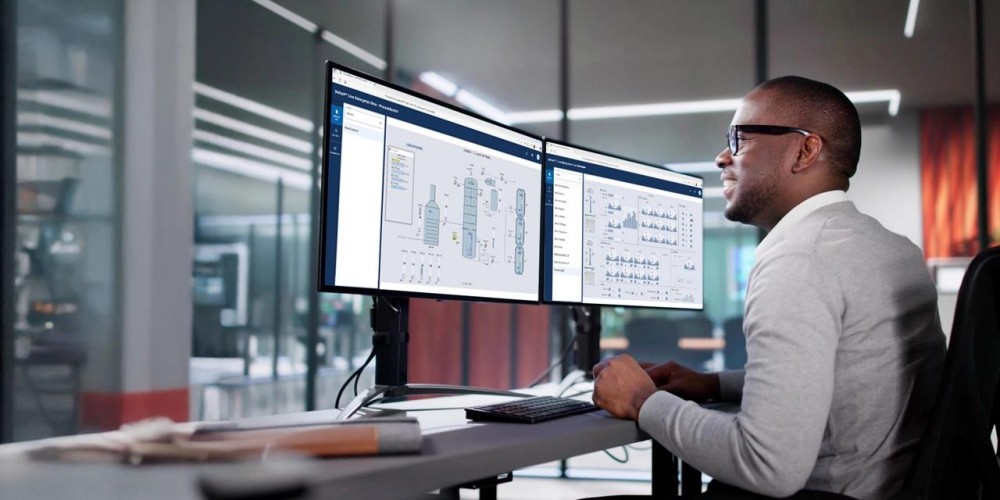
Many manufacturers already collect large volumes of data through distributed control systems (DCS), programmable logic controllers (PLCs), industrial sensors, historians, and asset management platforms. However, this information is often stored in separate systems and formats. Operational data may be available to plant engineers but difficult for enterprise analytics teams to use consistently.
The collaboration aims to address this challenge through the integration of AspenTech Inmation OT Data Fabric with the Databricks Data Intelligence Platform. Emerson says the integration will provide native access to contextualized industrial data within the Databricks environment, allowing customers to combine real-time and historical operational information with enterprise data.
The distinction between raw data and contextualized data is important. A temperature reading from a sensor, for example, becomes more useful when it is associated with a specific asset, process stage, operating condition, and time period. Context helps analytics applications interpret what a measurement represents rather than treating it as an isolated value.
AspenTech Inmation is intended to help manage and contextualize industrial information across field, edge, and cloud environments. By making this data available to Databricks, the companies aim to reduce the repeated work involved in collecting, integrating, and preparing operational information for individual analytics projects.
Potential applications include predictive maintenance, production performance analysis, asset optimization, and enterprise-wide operational reporting. For example, maintenance teams may combine equipment condition data with maintenance histories and production schedules to identify assets that require closer attention. Operations managers may use contextualized process information alongside business indicators to better understand production performance.
The announcement is also relevant to the wider development of industrial AI. Many companies are moving beyond isolated proof-of-concept projects and looking for ways to deploy analytics and AI across multiple plants and business units. This requires reliable data pipelines, consistent asset information, access controls, and governance processes.
For PLC and DCS engineers, the collaboration does not mean that enterprise AI platforms should replace real-time control systems. PLCs and DCS platforms remain responsible for deterministic control, interlocks, alarms, and process execution. Enterprise analytics and AI tools generally operate at a different layer, supporting analysis, optimization, and decision-making rather than directly taking over safety-critical control functions.
This separation is particularly important in industries such as chemicals, oil and gas, power generation, pharmaceuticals, and other process-intensive sectors. Connecting OT data to enterprise platforms must be accompanied by appropriate cybersecurity controls, network segmentation, data governance, and clear authorization policies.
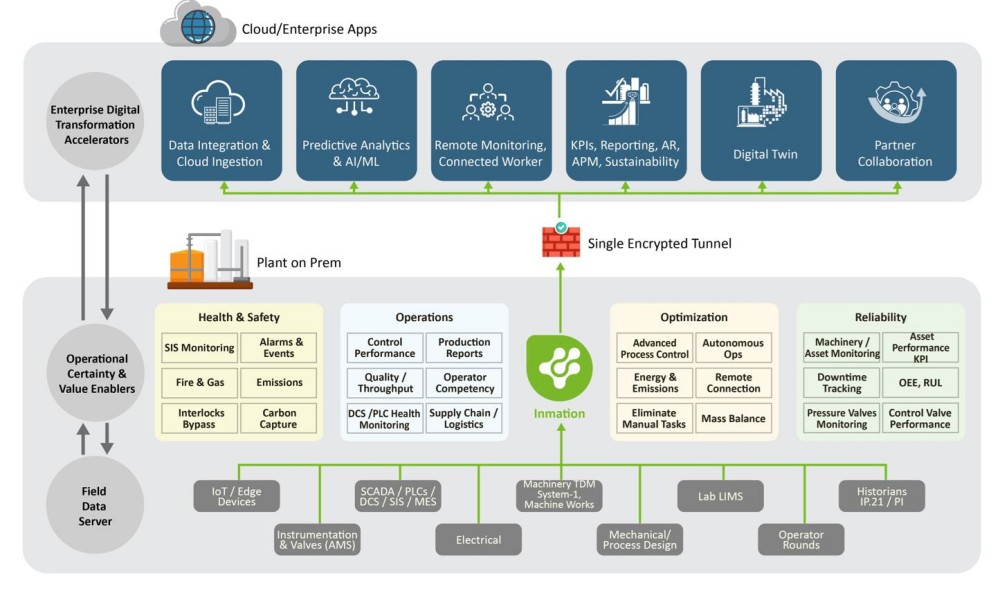
Emerson and Databricks are positioning the collaboration as a way to narrow the IT/OT gap and make industrial information more useful across the organization. If implemented effectively, the approach could help manufacturers move from disconnected plant data toward more consistent, scalable analytics and AI applications.
For industrial companies planning digital transformation projects, the key consideration is not simply collecting more data. It is ensuring that data from PLCs, DCS platforms, historians, and plant assets is accurate, contextualized, secure, and suitable for the decisions it is expected to support.
 Siemens Advances Industrial Automation With AI-Powered Production, PLC Engineering And Autonomous Robotics
 Dacke Industri Acquires ASO Safety Solutions To Expand Industrial Safety Sensor And Automation Capabilities
 Rockwell Automation Implements Plex MES At Booster Precision Components To Improve Manufacturing Visibility And Traceability
 Yokogawa Launches OpreX Universal Autonomous Control System R1.01 PLC For Process Automation