
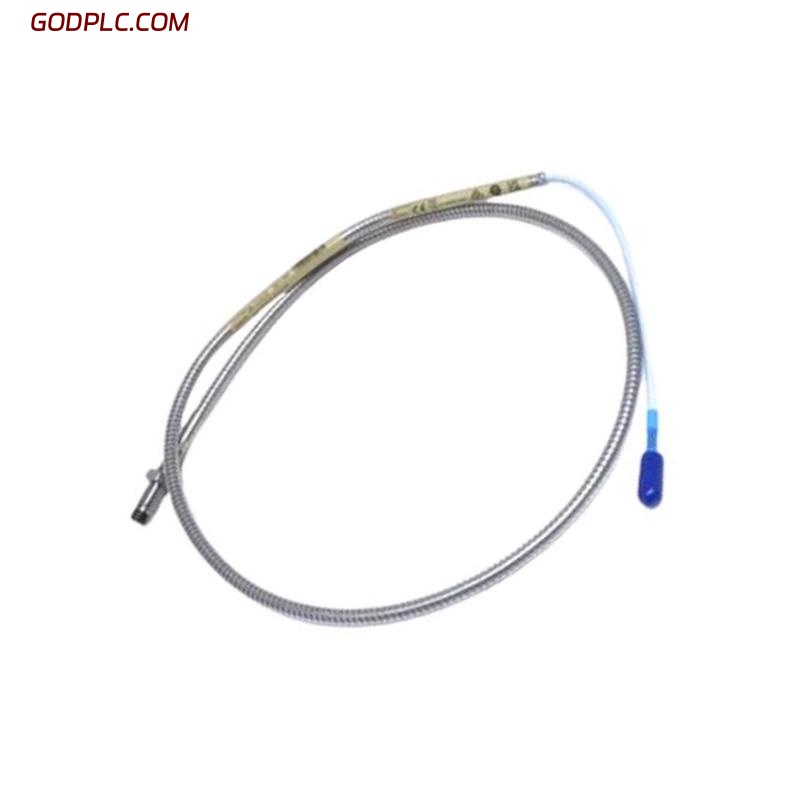
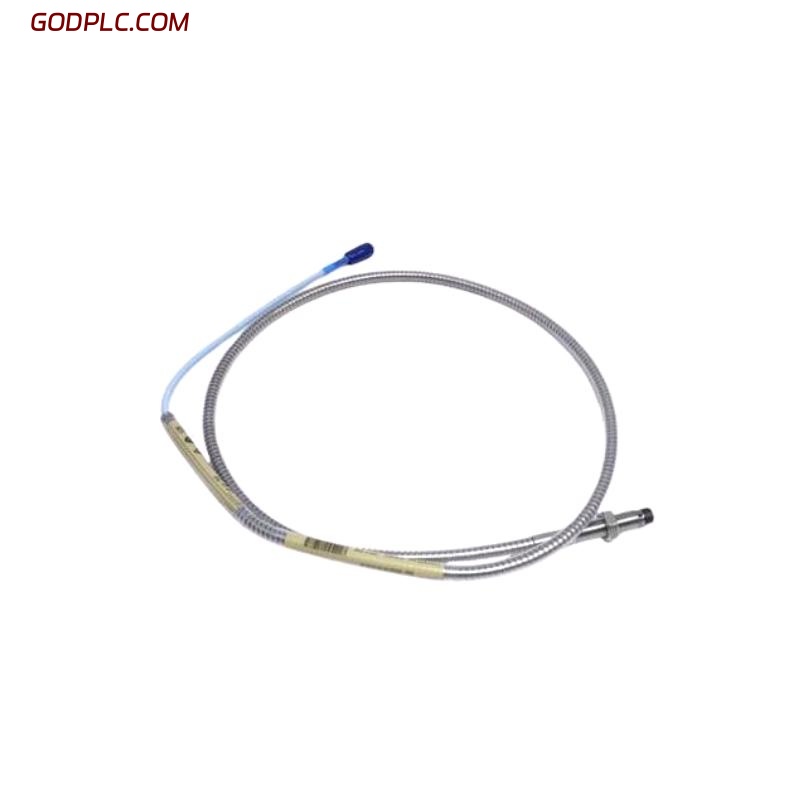

Technical Specifications
| Parameter | Description |
|---|---|
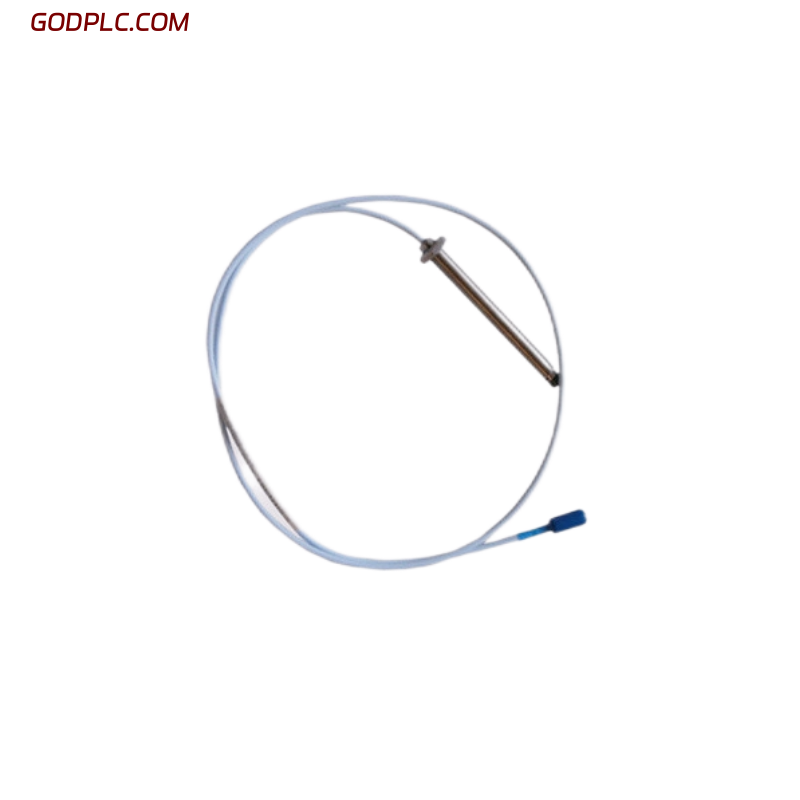
| Model | 330102-00-35-05-02-00 |
| Measurement Type | Eddy-current displacement sensor |
| Sensitivity | 50 mV/mil standard |
| Linear Range | 5 mm |
| Probe Tip Diameter | 2 mm |
| Thread Size | M8 × 1 |
| Probe Housing Material | Stainless steel, corrosion-resistant |
| Sensing Face | Ceramic tip for high wear resistance |
| Cable | 2 m integrated flexible cable |
| Cable Jacket | Oil, heat, and chemical resistant |
| Frequency Response | 0–10 kHz |
| Operating Temperature | –40°C to +120°C |
| Storage Temperature | –50°C to +150°C |
| Protection Rating | IP67 |
| Mounting | Threaded installation with locknut |
| Dimensions (L × W × H) | 100 mm × 5 mm × 5 mm |
| Weight | Approx. 185 g (including cable) |
FAQ
Q1: What type of surfaces can this sensor measure?
A1: Best suited for ferrous metal surfaces like steel and iron for optimal signal response.
Q2: Is the sensor suitable for high-vibration environments?
A2: Yes, with a stainless steel housing and IP67 protection, it is robust against vibration and dust.
Q3: How should the cable be handled during installation?
A3: Avoid sharp bends, pulling, or twisting. Ensure proper grounding to prevent interference.
Q4: Can this sensor be used with standard eddy-current amplifiers?
A4: Yes, the 50 mV/mil output is compatible with most industrial eddy-current amplifiers.
Q5: How often should calibration be performed?
A5: Annual calibration is recommended, or more frequently in harsh conditions.
Q6: What industrial applications is this sensor ideal for?
A6: Used for precision displacement measurement in rotating machinery, turbines, and process control.
Q7: Can the sensor handle exposure to industrial fluids?
A7: Yes, the housing and cable jacket resist oil, coolants, and many chemicals.
Q8: Are there special precautions for mounting?
A8: Apply correct torque to the threaded mount, keep the probe tip clean, and avoid strain on the cable.