Technical Specifications
| Parameter | Specification |
|---|---|
| Manufacturer | ABB |
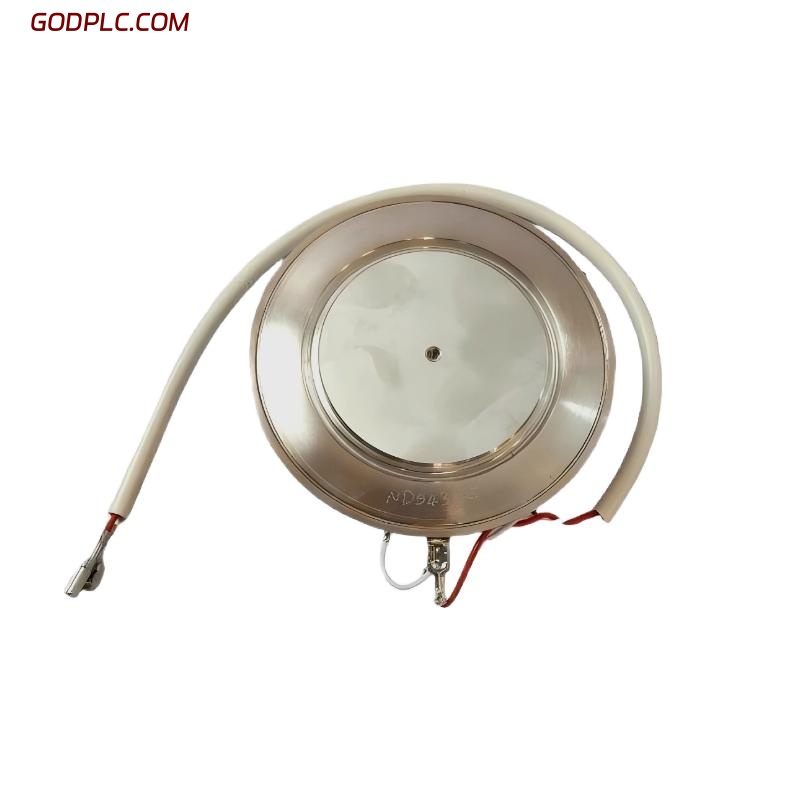
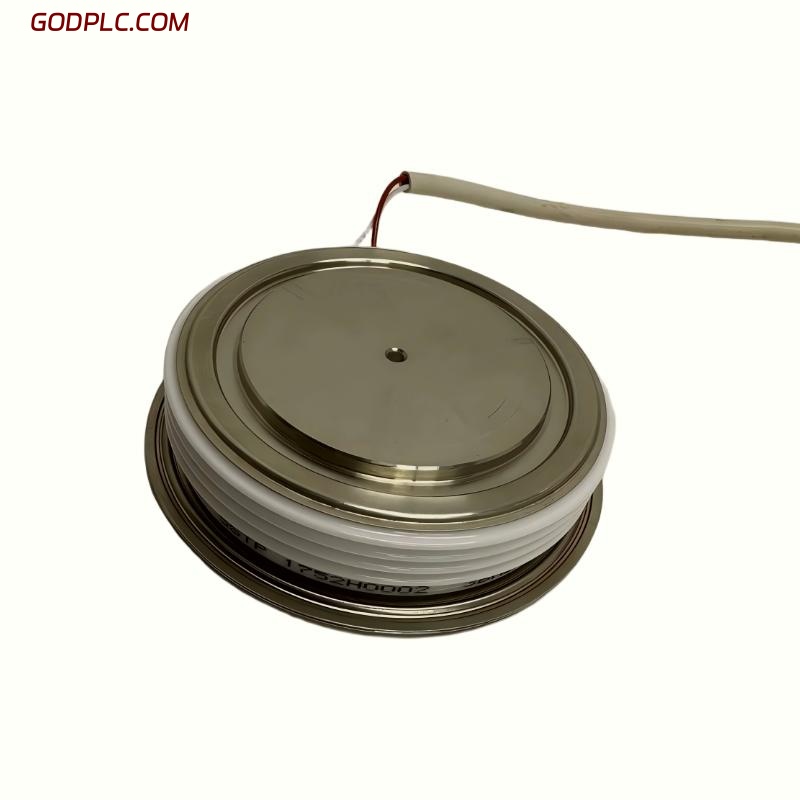
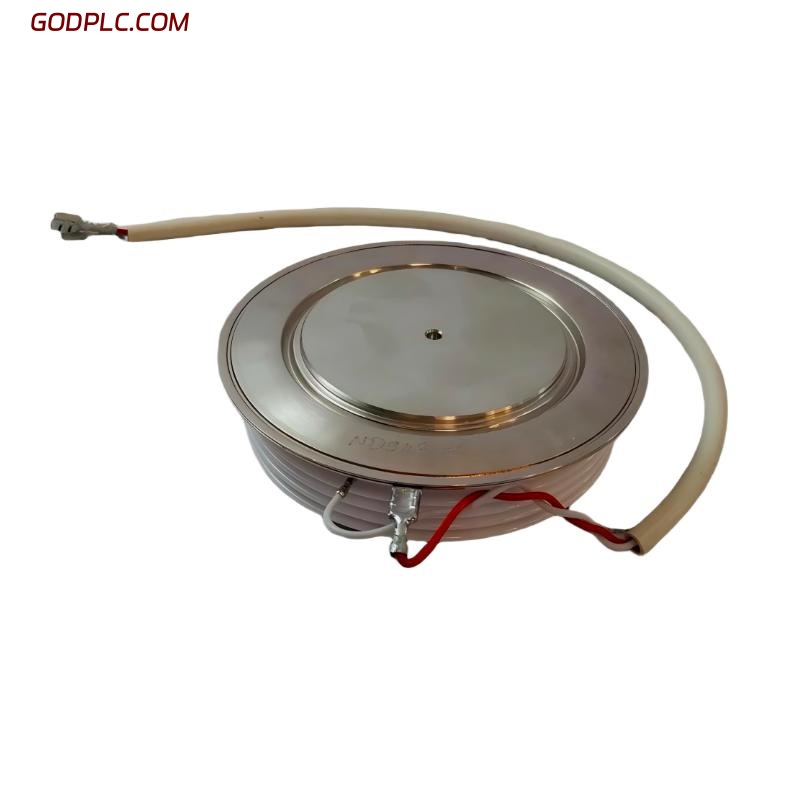
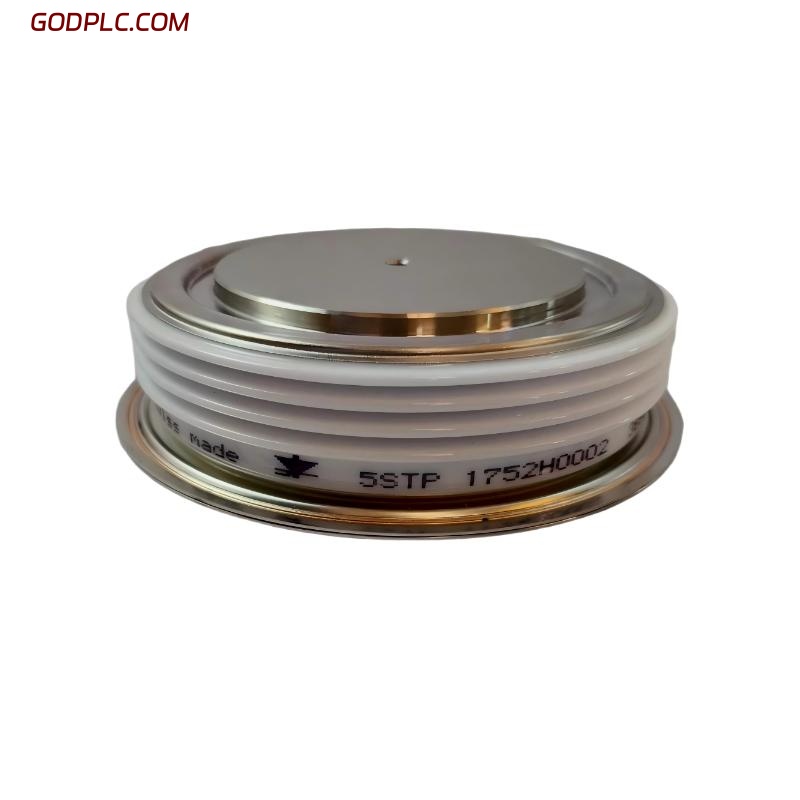
| Product Name | Crowbar Thyristor |
| Model Number | 5STP1752H000 |
| Ordering Code | 3BHL000986P3016 |
| Device Type | Fast-acting thyristor for crowbar protection |
| Maximum Repetitive Peak Voltage (VDRM/VRRM) | 5.2 kV |
| Rated Average On-State Current (IT(AV)) | 1750 A |
| Maximum Surge Current (ITSM) | ≥ 35 kA |
| Trigger Characteristics | Low trigger voltage, fast turn-on |
| On-State Voltage Drop | Low conduction loss design |
| Turn-Off Characteristics | Natural commutation via external circuit |
| Junction Temperature Range | -40 °C to +125 °C |
| Insulation Structure | High-strength ceramic housing |
| Cooling Method | Forced-air or liquid cooling (system dependent) |
| Mounting Type | Press-Pack |
| Dimensions | 140 × 100 × 30 mm |
| Weight | 1.06 kg |
FAQ
Q1: What are the primary applications of this crowbar thyristor?
A1: It is mainly used in generator excitation systems, DC bus protection in drives, and high-voltage power electronic systems requiring rapid overvoltage protection.
Q2: What is the function of a crowbar protection circuit?
A2: A crowbar circuit protects equipment from overvoltage by rapidly triggering a thyristor to create a short-circuit path, safely diverting excessive energy away from sensitive components.
Q3: How fast does this thyristor respond during a fault condition?
A3: The device is designed for fast triggering and rapid turn-on, enabling effective limitation of overvoltage duration in protection systems.
Q4: Does the device participate in normal power regulation?
A4: No. It remains inactive during normal operation and only conducts when an abnormal overvoltage condition is detected.
Q5: How is the thyristor triggered in practical applications?
A5: It is triggered by a dedicated protection or gate control circuit that monitors system voltage and activates the device when a predefined threshold is exceeded.
Q6: How can reliability be ensured under high surge energy conditions?
A6: Proper circuit design, including controlled loop inductance and adequate cooling, is essential to prevent exceeding the device’s surge current capability.
Q7: Is series operation possible for higher voltage systems?
A7: Yes, series connection is possible, but appropriate voltage balancing measures must be implemented to ensure equal voltage distribution.
Q8: What key checks should be performed during system commissioning?
A8: Critical checks include verification of trigger circuit functionality, protection response timing, electrical connection integrity, and proper cooling system operation.