

Technical Specifications
| Parameter | Specification |
|---|---|
| Model | NFAF135‑S50 S1 |
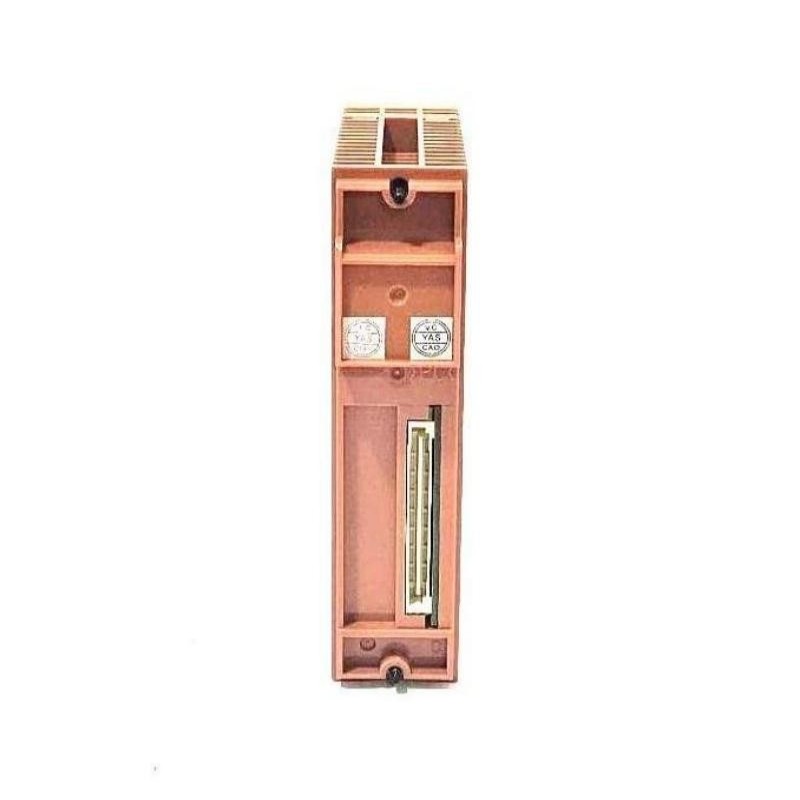
| Type | Frequency Input Module (8‑channel, isolated) |
| Number of Input Channels | 8 |
| Frequency Input Range | 0.01 Hz to 1,000 kHz |
| Accuracy | ±0.01% of reading |
| Input Signal Range | 0.01 V to 10 V |
| Minimum Input Pulse Width | 40 µs |
| Power Supply | 24 V DC |
| External Dimensions | Width ≈ 482 mm × Height ≈ 210 mm × Depth ≈ 220 mm |
| Weight | Approx. 1.0 kg |
FAQ
Q1: What does the suffix “‑S50 S1” in NFAF135‑S50 S1 mean?
A1: The “S50” indicates the standard model of this frequency input module; the extra “S1” often signifies a specific revision or version update within that model series.
Q2: What kind of signals can this module accept?
A2: It can handle voltage‑pulse inputs ranging from 0.01 V up to 10 V and supports frequencies from 0.01 Hz up to 1,000 kHz, enabling versatile usage for sensors that output pulse or low‑voltage signals.
Q3: How many channels are available and are they isolated?
A3: This module features eight channels, and each channel is electrically isolated to reduce interference and enhance measurement integrity.
Q4: What are the physical size and weight of the module?
A4: The module’s dimensions are approximately 482 mm in width, 210 mm in height, and 220 mm in depth. It weighs around 1.0 kg, making it relatively compact for rack or modular systems.
Q5: What is the accuracy of the frequency measurement?
A5: The measurement accuracy is specified as ±0.01% of the reading, offering high precision for industrial frequency measurement applications.
Q6: Is the module suitable for high‑speed pulse measurement?
A6: Yes — with a minimum input pulse width of 40 µs and a frequency input range up to 1,000 kHz, it is well suited to high‑speed pulse and frequency detection.
Q7: Where would this module typically be used in industrial automation?
A7: It is ideal for applications such as motor speed monitoring, flow rate counting, vibration analysis, and other process control tasks where accurate pulse/frequency input is required.
Q8: How should one verify compatibility and installation requirements for this module?
A8: One should consult the model’s detailed specification sheet or manufacturer documentation, ensure proper power supply (24 V DC), check isolation channel criteria, and confirm rack or modular mounting dimensions match the system installation.