100% Original, Ready to Ship!

ABB Enables China’s Chemical Industry Toward Future Smart Autonomous Operations With Ethernet-APL Technology
ABB is accelerating the digital transformation of China’s chemical industry by deploying its advanced Ethernet-Advanced Physical Layer (Ethernet-APL) technology, helping chemical plants move toward safer, more efficient, and increasingly autonomous operations. As global industrial users seek higher levels of connectivity and real-time data transparency, Ethernet-APL is emerging as a key enabling standard for next-generation process automation.
In large-scale chemical production environments, traditional fieldbus systems and legacy communication architectures often face limitations in bandwidth, distance, and integration with modern Industrial Internet of Things (IIoT) systems. ABB’s Ethernet-APL solution addresses these challenges by enabling seamless Ethernet connectivity directly into field-level instrumentation, eliminating barriers between operational technology (OT) and information technology (IT).
By integrating Ethernet-APL into chemical plant infrastructures in China, ABB is supporting operators in achieving continuous data flow from sensors and field devices to control systems and cloud-based analytics platforms. This enables real-time process monitoring, predictive maintenance, and advanced optimization of production assets. The result is improved operational efficiency, reduced unplanned downtime, and enhanced safety performance in hazardous environments.
One of the key advantages of Ethernet-APL technology is its ability to transmit both power and data over long distances using a two-wire system, making it particularly suitable for complex chemical plant layouts. It also supports intrinsic safety requirements, which are critical in explosive or high-risk process areas commonly found in chemical manufacturing facilities.
With China’s chemical industry increasingly focusing on digitalization, energy efficiency, and carbon reduction targets, ABB’s Ethernet-APL deployment aligns with broader industry trends toward smart manufacturing and autonomous operations. The technology forms a foundational layer for industrial AI applications, digital twins, and integrated asset performance management systems.
Industry experts note that Ethernet-APL is expected to become a standard communication backbone for process industries, enabling unified data architecture from field devices to enterprise systems. ABB’s early adoption and implementation in China position it as a key technology enabler for the transition toward intelligent, self-optimizing chemical plants.
As chemical producers continue to modernize their infrastructure, the combination of robust industrial networking, intelligent instrumentation, and advanced analytics will play a decisive role in shaping the future of autonomous operations. ABB’s Ethernet-APL initiative represents a significant step in this direction, offering a scalable and future-ready foundation for industrial digital transformation.
 Rockwell Automation Introduces FactoryTalk Conductor: A New AI Platform For Industrial Automation
 Rockwell Automation Expands Industrial AI Capabilities With NVIDIA Nemotron Support
 Rockwell Automation Introduces FactoryTalk Conductor To Advance AI-Driven Industrial Automation
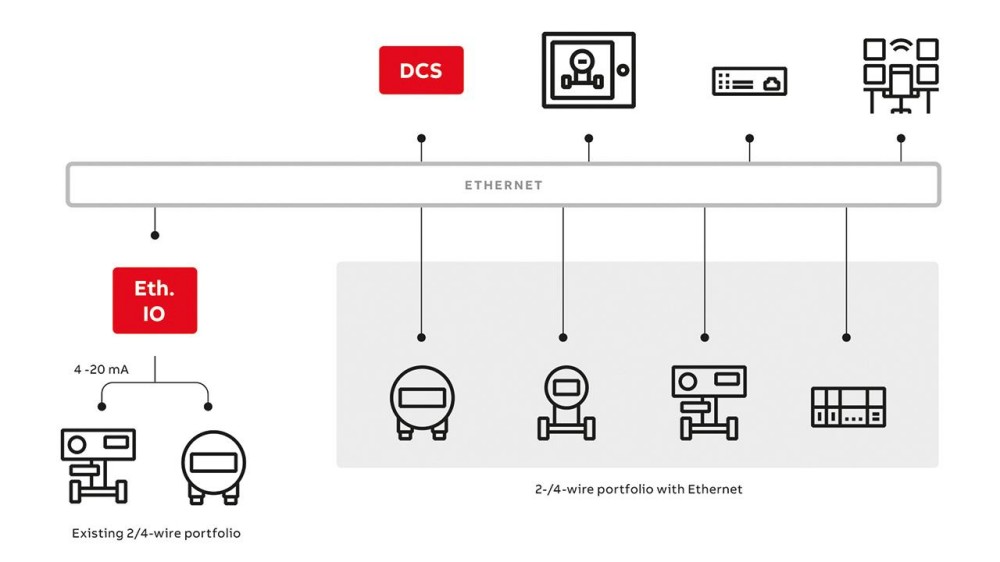 ABB And Boliden Advance DCS Modernization With Ethernet-APL Industrial Automation