100% Original, Ready to Ship!

Rockwell Automation To Demonstrate AI, PLC Control And Digital Twins At PACK EXPO International 2026
Rockwell Automation plans to demonstrate technologies supporting more autonomous manufacturing operations at PACK EXPO International 2026, scheduled for October 18–21 in Chicago, Illinois. The company announced on October 5 that its exhibition would bring together industrial control, software, artificial intelligence, digital twins, robotics and automated material movement.
The demonstration comes as manufacturers seek greater production flexibility while managing aging equipment, workforce constraints and pressure to improve operational efficiency. Rather than requiring factories to replace every existing system, the approach presented by Rockwell focuses on building new capabilities on top of an established automation foundation.
Connecting PLCs, Software and Production Data
Industrial automation relies on control systems that can execute machine sequences consistently and respond to process conditions. PLCs, drives, distributed I/O and industrial communication networks remain fundamental components of this architecture.
Rockwell says its exhibition will feature technologies within its Integrated Architecture portfolio, including PowerFlex drives, PointMax I/O and On-Machine offerings, alongside upcoming LogixEdge controllers designed to support greater flexibility through software-defined automation.
For plant engineers, the broader issue is how to connect machine-level control with production data and higher-level applications. When information from controllers and equipment is structured and accessible, manufacturers can improve monitoring, investigate recurring process issues and make more informed maintenance decisions.
Any upgrade, however, needs to account for existing controller configurations, communication protocols, application dependencies and the availability requirements of the production line.
Digital Twins and Virtual Commissioning
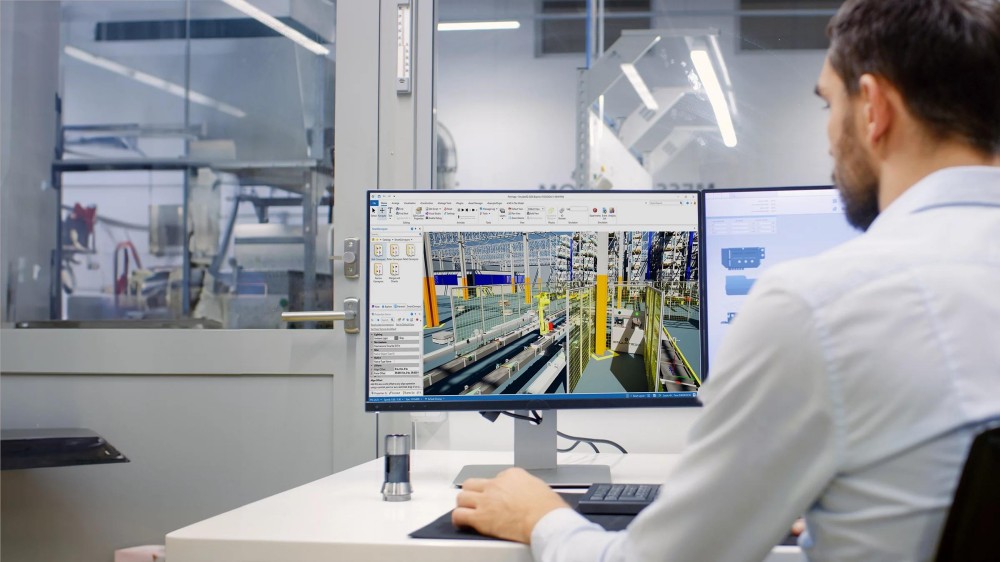
The planned demonstration will also feature FactoryTalk Optix and Emulate3D. Digital twin technologies can represent equipment, machines or production processes in a virtual environment, allowing engineering teams to evaluate designs and test selected operating scenarios before implementing changes on physical equipment.
Depending on the model and integration scope, virtual testing can help identify layout conflicts, evaluate material flow and support commissioning preparation. It can also provide a useful environment for discussing process changes among controls engineers, mechanical designers and operations teams.
A digital twin is not automatically an exact real-time replica of a factory. Its value depends on model accuracy, assumptions, data quality and how closely it reflects the actual equipment and process.
AI-Based Optimization and Autonomous Material Movement
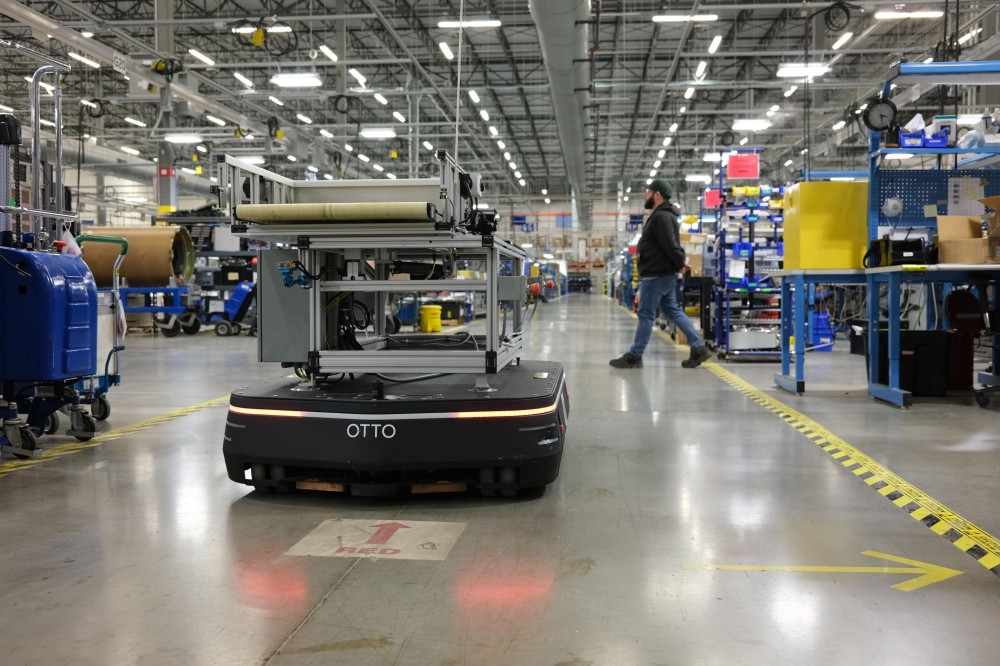
Rockwell also plans to showcase FactoryTalk Analytics Model Predictive Control, FactoryTalk Orchestration and OTTO autonomous mobile robots. The company describes its analytics offering as combining multivariable closed-loop control with agentic AI to help move from analysis toward action.
Model predictive control can use process models and operating constraints to calculate control adjustments across multiple variables. In industrial applications, engineers must validate the model, define operating limits and ensure that the control strategy is appropriate for the process.
Factory workflow orchestration and autonomous mobile robots address another manufacturing challenge: coordinating material movement with production requirements. When integrated effectively, these systems can help reduce manual transport tasks and improve the coordination of equipment and workflows.
Practical Considerations for Manufacturers
Autonomous operations are not achieved by installing a single AI application. Successful implementation requires reliable control infrastructure, consistent production data, appropriate network security and clear responsibility for machine behavior.
Manufacturers considering these technologies should begin with a defined operational problem, such as reducing unplanned downtime, improving commissioning efficiency or coordinating internal logistics. A limited pilot can help establish measurable performance targets before broader deployment.
Rockwell Automation’s planned PACK EXPO demonstration reflects the wider direction of industrial automation: combining PLC-based control with software, data analytics, digital engineering and robotics. For manufacturers, the most useful strategy is to introduce these capabilities incrementally while preserving system reliability, maintainability and safe operation.
 Rockwell Automation Expands Industrial AI Capabilities With NVIDIA Nemotron Support
 Rockwell Automation Introduces FactoryTalk Conductor To Advance AI-Driven Industrial Automation
 ABB And Boliden Advance DCS Modernization With Ethernet-APL Industrial Automation
 Bosch Rexroth Expands ctrlX AUTOMATION With New Safety PLC, Drive And Software Features