100% Original, Ready to Ship!

Beckhoff And Bright Machines Advance AI-Enabled Manufacturing With TwinCAT And EtherCAT
The connection between industrial automation, artificial intelligence and data center manufacturing is becoming increasingly visible in 2026. On August 10, Beckhoff highlighted its collaboration with Bright Machines, whose Bright Factory platform combines intelligent automation, real-time control, AI-enabled robotics and data-driven manufacturing for advanced data center infrastructure.
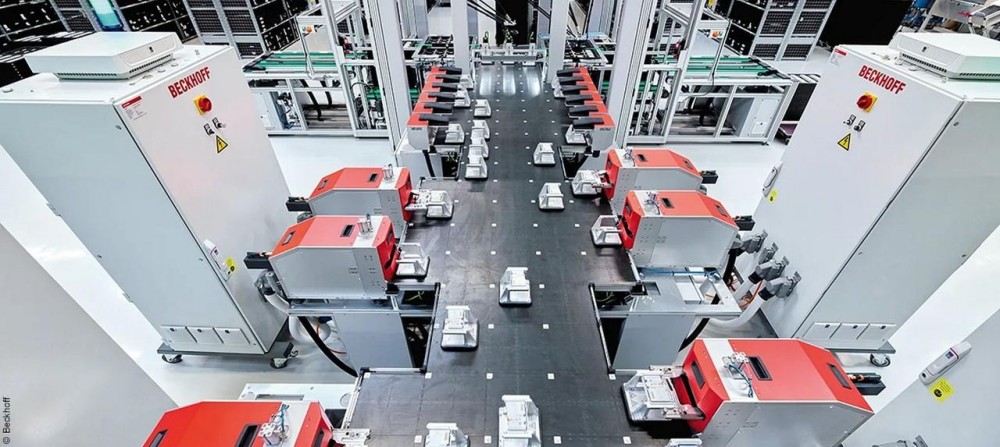
The manufacturing platform is designed to provide greater flexibility and scalability as demand for AI and data center hardware continues to increase. At the center of the automation architecture are Beckhoff TwinCAT software and EtherCAT technology.
Real-Time Control Meets AI Manufacturing
Bright Factory uses a modular automation architecture designed around flexible production cells. According to Beckhoff, the current configuration controls approximately 10 motion axes and around 2,000 EtherCAT I/O points.
The system combines real-time control with machine intelligence, allowing production equipment to perform complex assembly operations while collecting process information for higher-level software and monitoring systems.
TwinCAT provides a unified software environment for control, motion and automation functions. EtherCAT provides the high-performance industrial communication infrastructure required to connect distributed I/O and automation devices.
This combination is particularly relevant for manufacturers building flexible production lines where machines and control functions need to be expanded without completely redesigning the system.
OPC UA Connects Control and Factory Data
Another important element of the architecture is data connectivity.
The Bright Factory uses a Beckhoff OPC UA Server to transfer process data from the control layer to Bright Machines’ orchestration software and cloud-based monitoring systems. This creates a connection between real-time machine control and higher-level production management.
For modern automation projects, this type of architecture is becoming increasingly important. PLC and industrial control systems still need deterministic performance, but manufacturers also want production data to be available for analytics, monitoring, optimization and AI applications.
OPC UA and industrial Ethernet technologies can help bridge this gap between operational technology and IT systems.
Modular Automation for Scalable Production
Bright Machines’ approach also demonstrates why modular automation is gaining attention.
Each manufacturing cell can operate independently while communicating through standardized interfaces. Additional production stations can be integrated by extending EtherCAT nodes or adding I/O modules instead of rebuilding the entire control architecture.
This approach can reduce engineering effort when production requirements change.
For OEMs and system integrators, reusable PLC programs, standardized I/O structures and modular machine architectures can also make commissioning, troubleshooting and future expansion easier.
What It Means for Industrial Automation
The Bright Factory example illustrates a broader change in factory automation. Modern production systems are no longer designed only around PLC logic and physical machinery. Increasingly, automation combines real-time control, motion technology, industrial networks, machine data, AI-enabled robotics and software platforms.
This does not mean that traditional PLC technology is disappearing. Instead, PLCs, PC-based controllers and industrial communication systems are becoming part of a larger digital automation architecture.
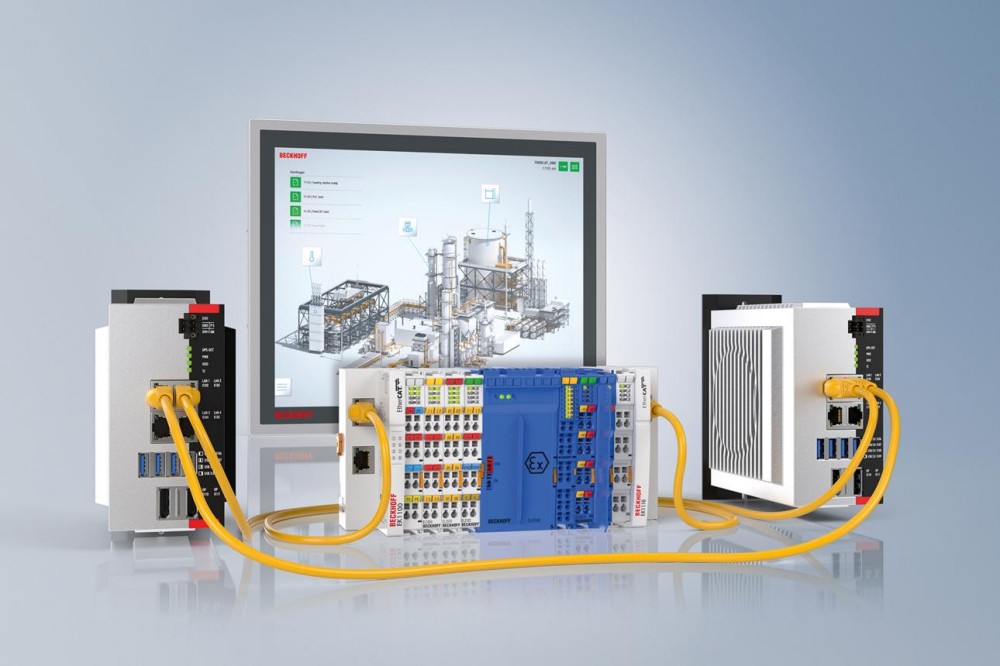
As AI infrastructure manufacturing expands, similar requirements are likely to appear in electronics, semiconductor, battery, automotive and advanced manufacturing applications.
The combination of TwinCAT, EtherCAT, OPC UA, robotics and AI-enabled production demonstrates how industrial automation is evolving toward systems that are not only faster and more precise, but also more modular, connected and adaptable.
 U.S. Industrial Robot Installations Rise 11% As Flexible Automation Expands
 Siemens S7 PLC Cybersecurity Warning Highlights Growing OT Security Risks
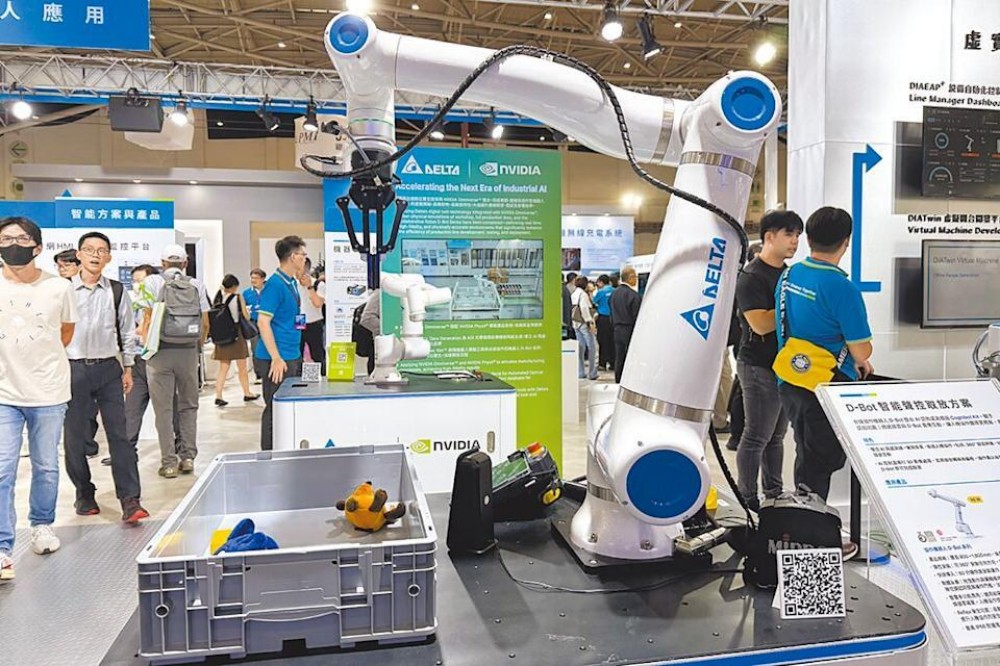 Delta’s Embodied AI And Digital Twins Signal A New Era For Industrial Automation
 Schneider Electric Advances Software-Defined Automation For PLC And DCS Modernization