100% Original, Ready to Ship!

Siemens And P&G Expand AI Quality Inspection Across Global Manufacturing
Siemens and Procter & Gamble (P&G) are expanding the deployment of an artificial intelligence-based quality inspection solution across P&G manufacturing operations worldwide, marking another important development in the use of Industrial AI, machine vision and edge computing for high-speed production environments.
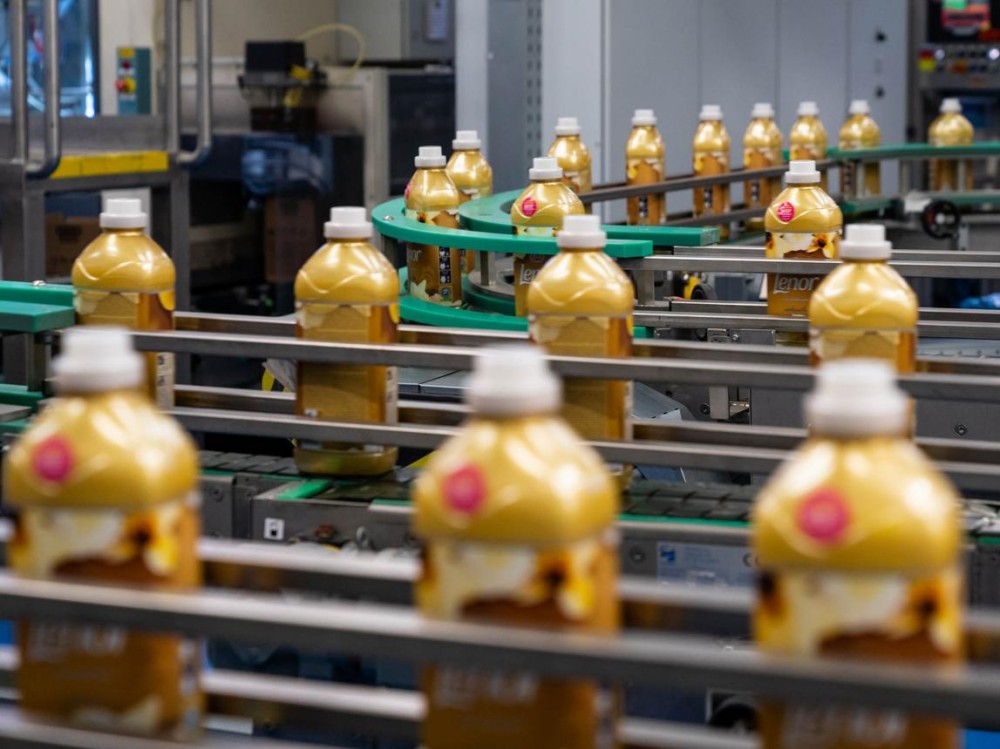
The solution, known as the Visual Inspection Cockpit (VIC), is designed to inspect products in real time while production lines are operating at full speed. Instead of relying entirely on traditional vision systems that may require extensive reconfiguration when products or packaging change, the AI-based approach is designed to handle variations in materials, textures, shapes and production conditions more effectively.
The system combines P&G’s deep-learning models with Siemens Industrial Edge technology, industrial computers and AI hardware and software. Inspection data is processed close to the production equipment, allowing manufacturing systems to react rapidly when quality problems are detected. For example, the system can generate alerts or trigger the automatic removal of defective products from the production line.
According to the companies, the technology has reduced scrap rates by approximately 10% to 20% depending on the product and application. New inspection deployments can also be commissioned five to ten times faster than traditional customized vision systems. These figures demonstrate how AI can increasingly become part of practical factory automation rather than remaining limited to experimental applications.
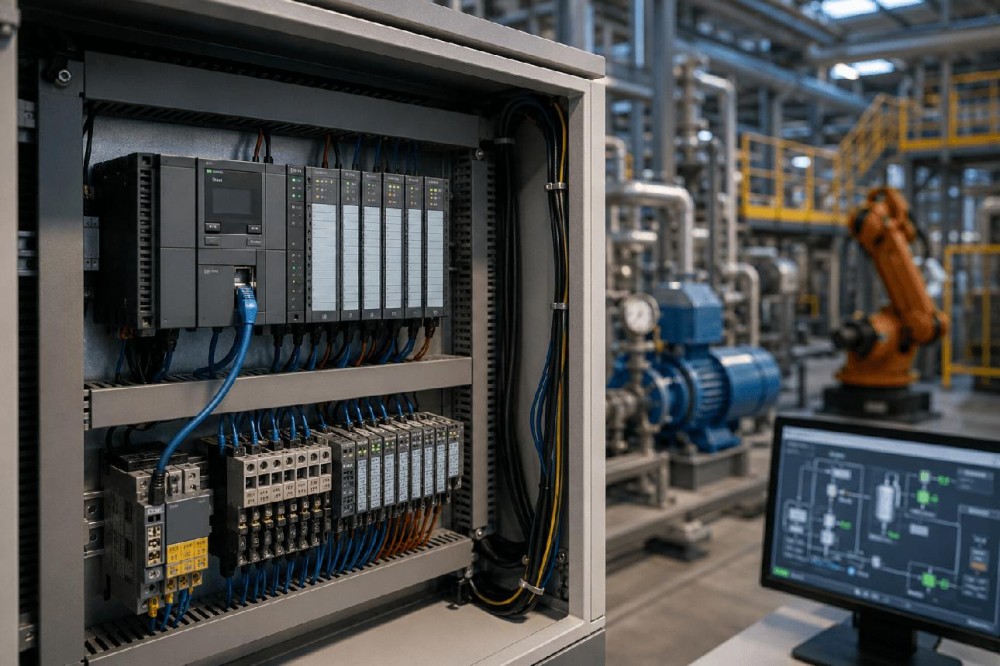
The integration with industrial control systems is particularly relevant for automation engineers. Inspection results can be connected directly with manufacturing operations and PLC-controlled production processes, allowing quality decisions to become part of the automated production workflow.
For manufacturers, the development highlights an important direction in industrial automation: combining machine vision, Industrial AI, edge computing and control technology into a single production architecture. As factories manufacture increasingly diverse products at higher speeds, automated inspection systems need to identify defects without slowing down production.
The Siemens and P&G deployment also shows how AI-based inspection can be scaled from individual production lines to multiple manufacturing facilities. This approach could become increasingly important for consumer goods, packaging, food processing, electronics and other industries where production quality must be monitored continuously.
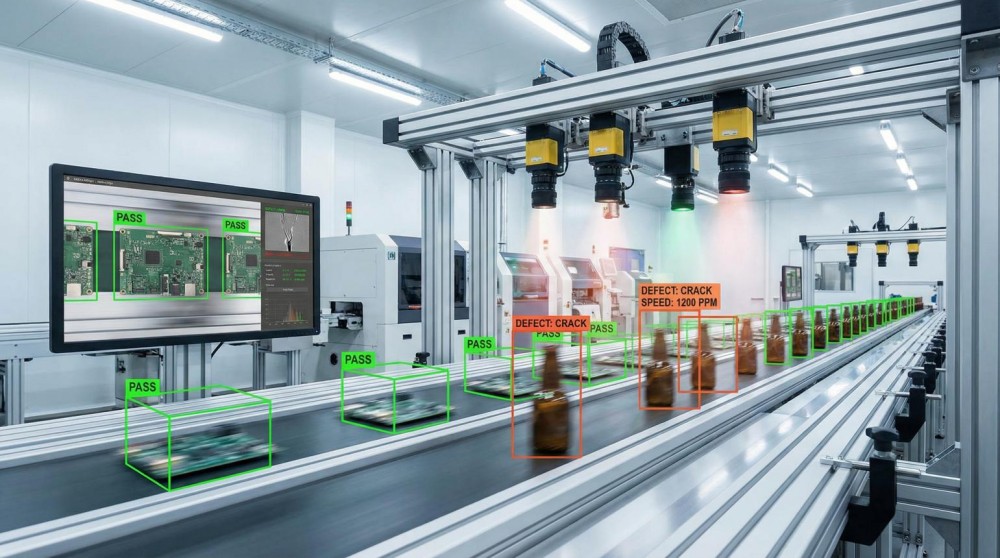
The latest development reinforces the growing connection between PLC-based automation, industrial networking, edge computing and AI. Rather than replacing conventional control systems, AI inspection technologies can work alongside PLCs and industrial automation platforms to provide additional real-time information for production decisions.
For global manufacturers, the combination of AI vision and industrial automation offers a practical pathway toward more flexible, data-driven and scalable production systems.
 Rockwell Automation Introduces FactoryTalk Conductor: A New AI Platform For Industrial Automation
 Rockwell Automation Expands Industrial AI Capabilities With NVIDIA Nemotron Support
 Rockwell Automation Introduces FactoryTalk Conductor To Advance AI-Driven Industrial Automation
 ABB And Boliden Advance DCS Modernization With Ethernet-APL Industrial Automation