100% Original, Ready to Ship!

Renesas Opens Beijing Physical AI & Robotics Lab To Accelerate Industrial Automation Innovation
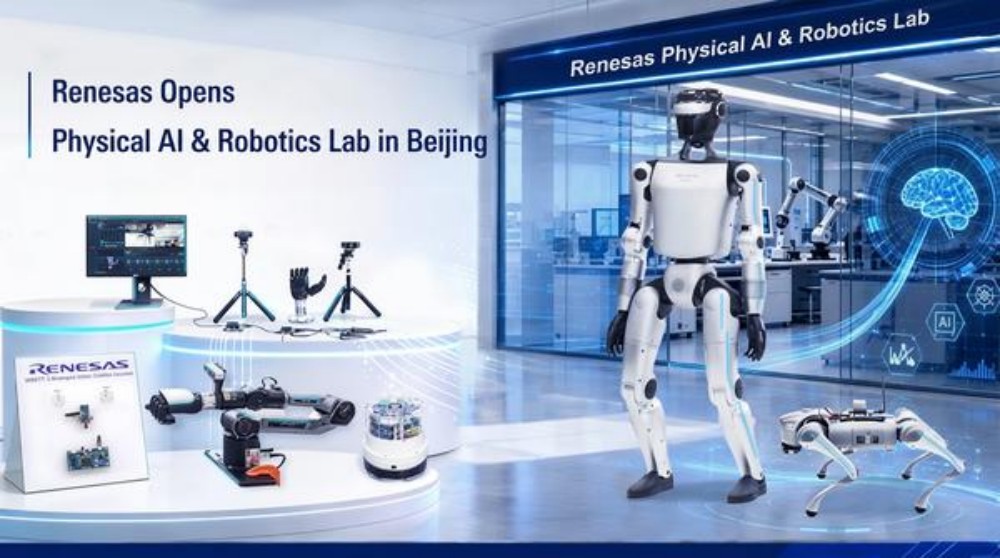
Renesas Electronics has opened a new Physical AI & Robotics Lab in Beijing, China, marking a significant step in the development of intelligent robotics and next-generation industrial automation. The new facility is designed to support system-level demonstrations, technology validation, and joint development of robotic systems and Physical AI applications.
The development reflects a broader change in industrial automation. Traditional automation systems have generally relied on PLCs, motion controllers, sensors, industrial networks, and predefined control logic. Physical AI introduces a new layer of intelligence that allows machines to perceive their environment, process information, and interact with the physical world.
For industrial automation engineers, this trend is particularly important because robotic systems require the integration of multiple technologies. Embedded processors, sensors, motor control, power management, AI models, software, and real-time control must work together as one system.
Renesas says its technology portfolio can address a significant portion of the components required by humanoid robots. The company is focusing on areas including control systems, sensing, power management, AI processing, software, and system development.
The new Beijing laboratory is intended to bring these technologies together in a practical engineering environment. Customers, robotics companies, ecosystem partners, universities, and startups can use the facility for system validation and collaborative development.
This approach is highly relevant to smart manufacturing. Modern factories increasingly combine PLC control systems with industrial robots, machine vision, edge computing, servo systems, and industrial communication networks. As AI becomes more capable, robots may be able to perform tasks that previously required highly specialized automation equipment.
However, integrating AI into industrial environments also creates new engineering challenges. Industrial robots must operate safely, reliably, and with predictable response times. AI-based decision-making therefore needs to work together with deterministic control, functional safety, motion control, and industrial networking.
The development of Physical AI does not necessarily mean that PLCs or DCS systems will disappear. Instead, future automation architectures may combine conventional control systems with intelligent robotic platforms. PLCs can continue managing deterministic machine sequences, interlocks, I/O, and process control, while AI-enabled robots handle more flexible operations.
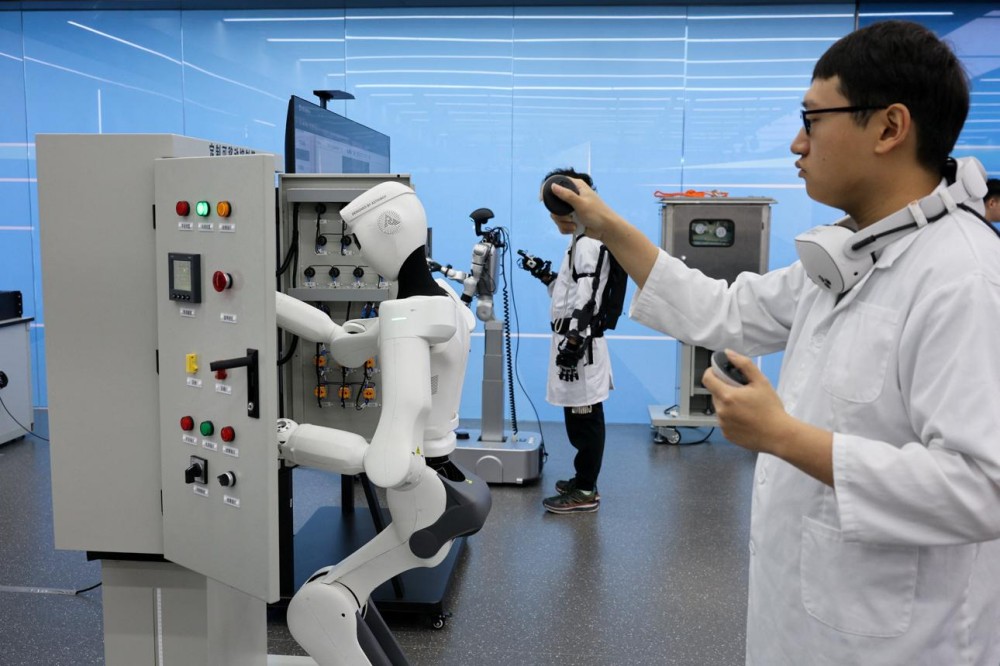
The opening of Renesas’ Beijing laboratory highlights how semiconductor and technology companies are moving beyond individual components toward complete automation solutions.
For PLC, DCS, SCADA, and industrial automation professionals, Physical AI is becoming an important technology trend to monitor. The combination of AI, robotics, sensors, embedded computing, and industrial control could play a major role in the development of future smart factories.
 Schneider Electric Launches Foxboro Software-Defined DCS To Advance Industrial Automation
 Rockwell Automation Introduces FactoryTalk Conductor: A New AI Platform For Industrial Automation
 Rockwell Automation Expands Industrial AI Capabilities With NVIDIA Nemotron Support
 Rockwell Automation Introduces FactoryTalk Conductor To Advance AI-Driven Industrial Automation