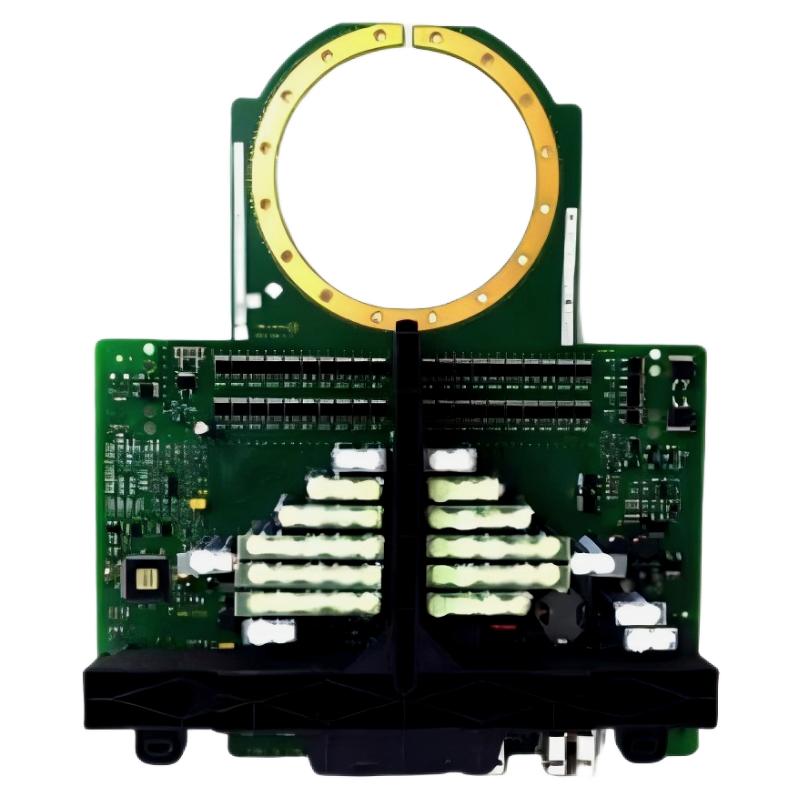
ABB 5SHY4045L0004 IGCT Module Troubleshooting Entry Point
ABB 5SHY4045L0004 IGCT Module faults should not be diagnosed from a single alarm. A converter may report an overcurrent, firing failure, phase imbalance, or protection trip even when the semiconductor is healthy. Effective Troubleshooting starts by separating command, gate-drive, power-stage, cooling, and feedback problems before deciding whether the IGCT requires replacement.
ABB 5SHY4045L0004 IGCT Fault Patterns
Typical symptoms around an ABB 5SHY4045L0004 installation can include converter blocking, abnormal phase current, repeated firing-related alarms, excessive thermal rise, or an immediate protection trip after enable. These symptoms overlap with faults in gate electronics, sensors, wiring, cooling, and the surrounding power circuit.
- Immediate trip when the power stage is enabled.
- Unequal phase current under otherwise similar operating conditions.
- Repeated firing or gate-drive supervision alarms.
- Unexpected temperature increase in one semiconductor position.
- Protection trips that occur only after load increases.
- Intermittent faults that disappear after the converter is restarted.
A useful rule in field Troubleshooting is to distinguish between a fault that follows the device and a fault that stays with the converter position. If the symptom remains in the same phase after controlled component substitution, the investigation should move toward the surrounding circuit.
ABB 5SHY4045L0004 Fault Diagnosis Thinking Process
Fault Diagnosis should follow the signal path rather than the alarm wording. Start with the operating command and work toward the physical switching event.
- Determine exactly when the fault occurs.
- Identify whether the command to switch was actually issued.
- Verify gate-driver readiness and feedback.
- Check power-stage voltage and current behavior.
- Compare the affected phase with a healthy phase.
- Check thermal and cooling conditions.
- Only then evaluate the IGCT as a suspected failed component.
This approach prevents a common maintenance mistake: replacing a high-value power semiconductor when the actual problem is a gate-driver supply, optical interface, loose connection, cooling restriction, or measurement circuit.
ABB 5SHY4045L0004 Electrical and Thermal Measurements
Measurements should be made using instruments and procedures rated for the converter’s electrical environment. Do not probe a high-voltage power stage with general-purpose test equipment or bypass interlocks to obtain a measurement.
Useful diagnostic observations include:
- DC-link voltage before and during the event.
- Phase current waveform and current balance.
- Gate-driver ready and fault indications.
- Cooling-system status and temperature trend.
- Protection timing relative to the switching command.
- Voltage or current feedback consistency between phases.
# Pseudo fault-diagnosis sequence
EVENT = CAPTURE_LAST_TRIP()

CHECK(EVENT.command_status)
CHECK(EVENT.gate_driver_status)
CHECK(EVENT.cooling_status)
CHECK(EVENT.dc_bus_status)
CHECK(EVENT.phase_current)

COMPARE(PHASE_A, PHASE_B, PHASE_C)

IF gate_driver_fault:
    INVESTIGATE_GATE_PATH()

ELSE IF cooling_fault:
    INVESTIGATE_COOLING_PATH()

ELSE IF phase_current_is_abnormal:
    INVESTIGATE_POWER_STAGE()

ELSE:
    CONTINUE_COMPONENT_LEVEL_TESTING()
The above is diagnostic pseudocode only. It illustrates the logic an engineer can apply when reviewing converter event records.
ABB 5SHY4045L0004 Root Cause Isolation
The most useful question during Troubleshooting is not “Which component alarmed?” but “Which physical condition changed first?” If the gate-driver status changes before the current abnormality, the gate-control circuit deserves priority. If current rises first and the protection circuit reacts afterward, the investigation should move toward the power stage and load condition.
Likewise, if temperature increases progressively over several load cycles while electrical switching remains normal, cooling or thermal interface problems may be more likely than an instantaneous semiconductor failure.
ABB 5SHY4045L0004 IGCT Repair and Replacement Strategy
Once the evidence indicates a defective ABB 5SHY4045L0004, replacement should be performed only after the surrounding fault mechanism has been investigated. Otherwise, a new IGCT can be exposed to the same abnormal condition and fail again.
- Record the failed component identification and converter position.
- Document the last known operating condition.
- Save available trip and diagnostic records.
- Inspect the gate-control and protection circuits.
- Inspect bus connections and thermal interfaces.
- Check the cooling path.
- Install the correct replacement according to the equipment procedure.
- Repeat controlled Commissioning before returning to normal load.
For an expensive high-power semiconductor, the failed part should also be retained for engineering analysis when practical. Physical evidence such as discoloration, cracking, burn marks, or damaged connections can help establish whether the original failure was electrical, thermal, mechanical, or secondary.
ABB 5SHY4045L0004 Troubleshooting Case Study
In a representative field investigation, a high-power converter generated repeated protection trips shortly after a replacement power module had been installed. The first assumption was that the new IGCT was defective. The troubleshooting team instead compared the affected phase with a neighboring phase under controlled conditions.
The gate-control indication remained ready, but the abnormal phase showed a different current response immediately after the switching command. The team then inspected the power connections and mechanical interface rather than removing the semiconductor immediately. This narrowed the investigation from the complete converter to the specific power-stage position.
The engineering lesson is important: an IGCT alarm does not automatically identify the IGCT as the root cause. Fault Diagnosis becomes much more reliable when event timing, phase comparison, electrical measurements, and physical inspection are evaluated together.
ABB 5SHY4045L0004 Troubleshooting FAQ
What is the first check for an ABB 5SHY4045L0004 fault?
Determine exactly when the fault occurs and review the associated command, gate-driver status, protection event, current behavior, and cooling status. This establishes whether the problem begins in the control path or power path.
Can an overcurrent alarm prove that the ABB 5SHY4045L0004 has failed?
No. Overcurrent can result from load conditions, control timing, gate-drive problems, short circuits, feedback errors, or other power-stage faults. The semiconductor should not be condemned from the alarm alone.
Why should a healthy phase be used for comparison?
A neighboring healthy phase provides a practical reference for current behavior, feedback signals, temperature trends, and control status. Differences between otherwise equivalent phases can significantly narrow the Fault Diagnosis process.
What can cause repeated ABB 5SHY4045L0004 firing-related faults?
Possible causes include gate-driver problems, auxiliary supply issues, optical or control-interface problems, protection interlocks, wiring defects, feedback errors, or an actual semiconductor fault. The exact cause must be established from measurements and event timing.
ABB 5SHY4045L0004 Fault Diagnosis Conclusion
ABB 5SHY4045L0004 Troubleshooting should be based on evidence rather than alarm names or immediate component replacement. The strongest field approach is to reconstruct the fault sequence, compare affected and healthy phases, verify gate-control and protection signals, examine electrical and thermal measurements, and then isolate the physical root cause. This method reduces unnecessary IGCT replacement and provides a safer path from Fault Diagnosis through Repair and final Commissioning.