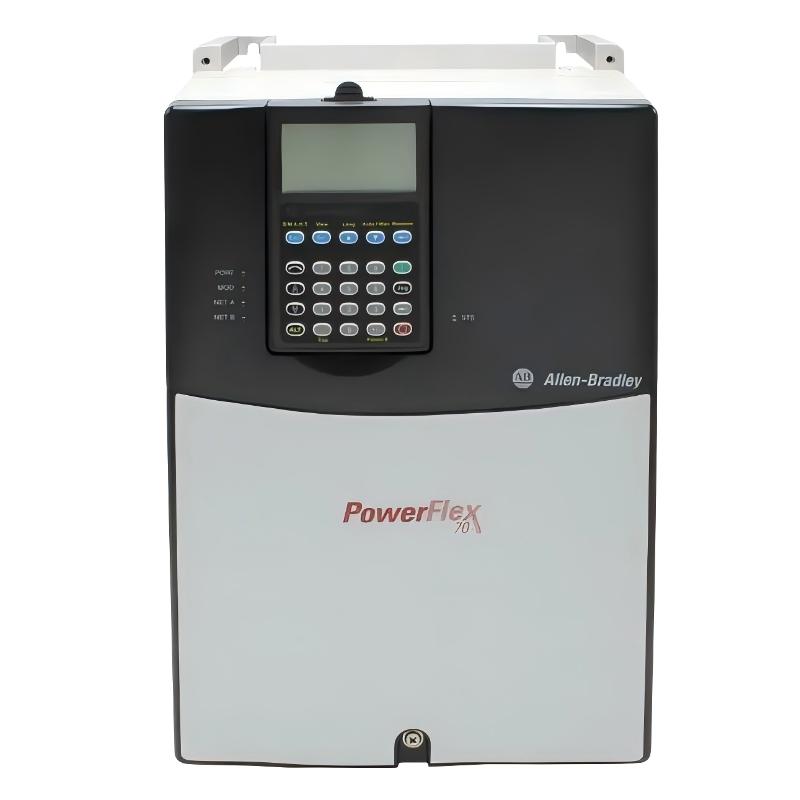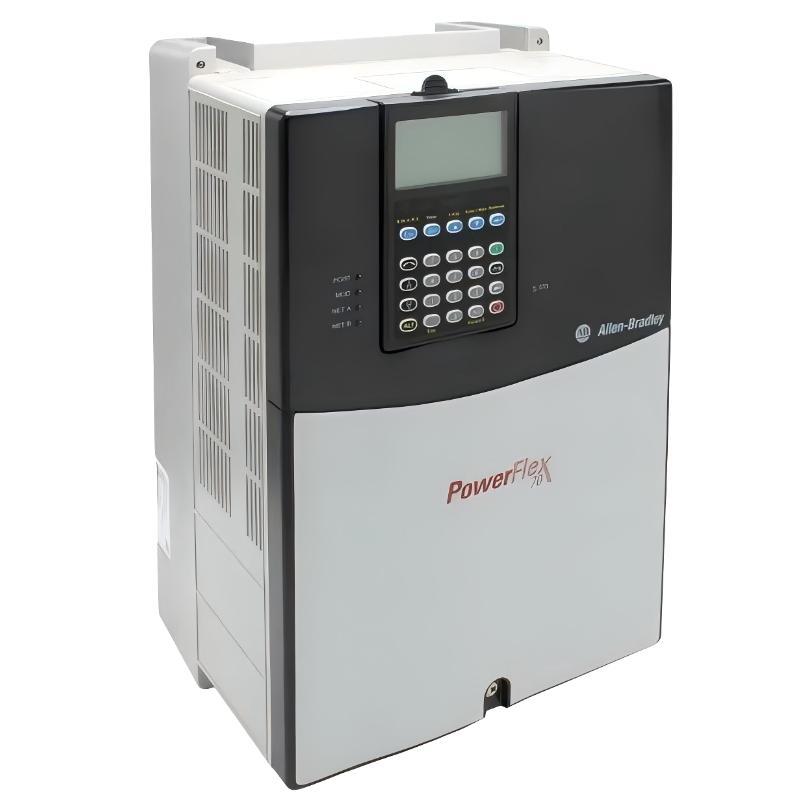
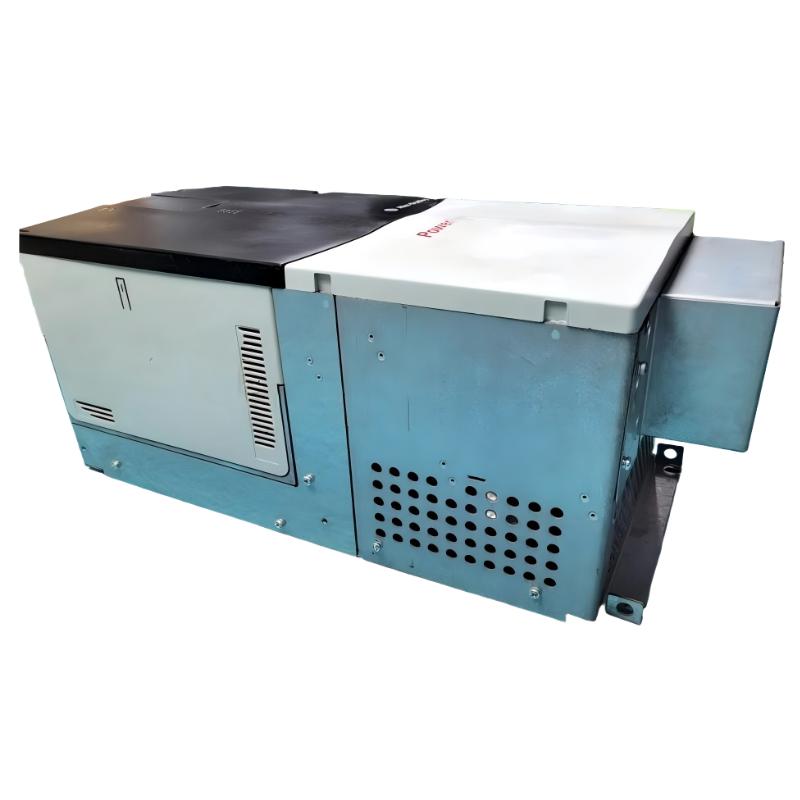
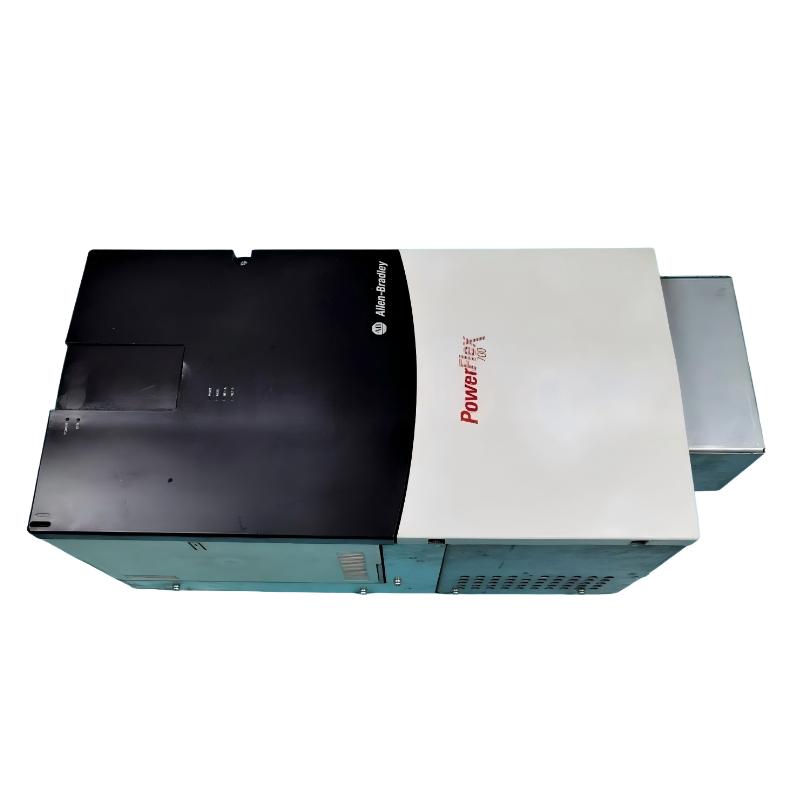
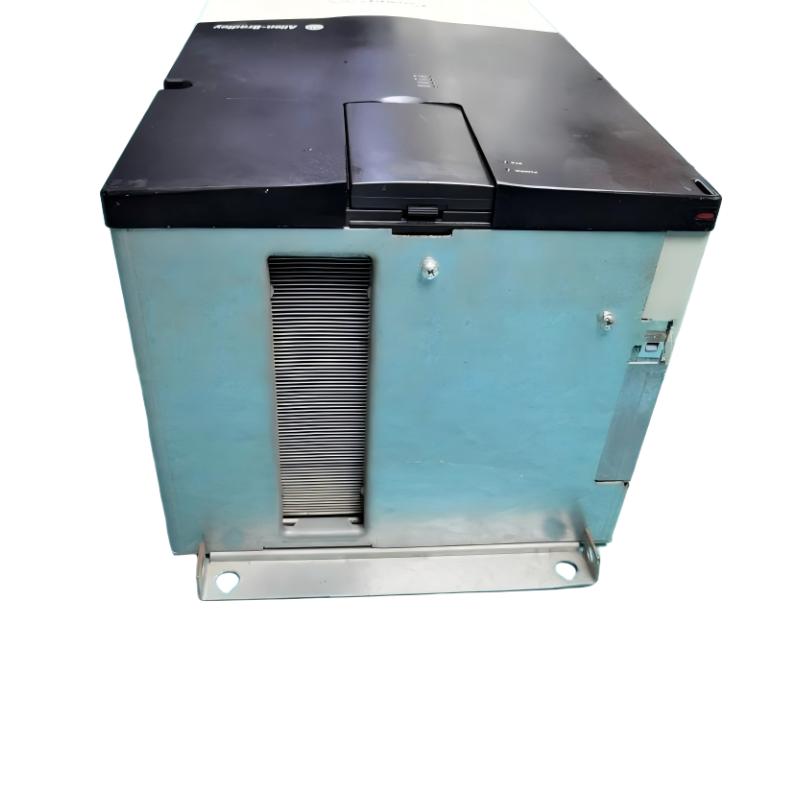
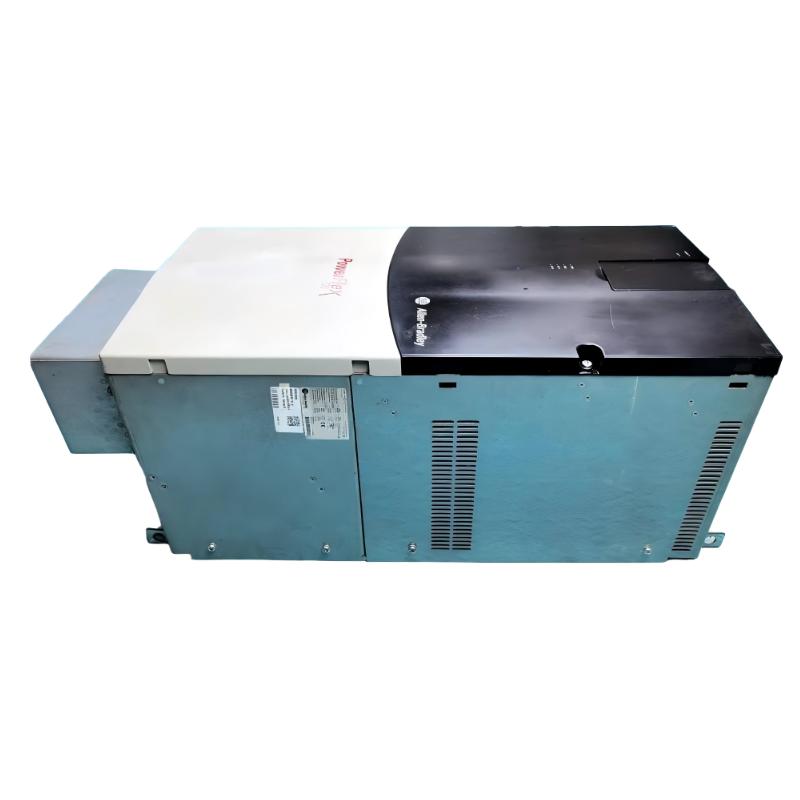
Allen Bradley 20BD125A3ANNAND0 PowerFlex 700 AC Drive
| Company Information | ||||||||
| [email protected] | ||||||||
| Mobile | +8613666084105 | |||||||
| +8613666084105 | ||||||||
| 13666084105 | ||||||||
| Add to | Room 1004, No. 62 Xiangxiu Li, Siming District, Xiamen City, Fujian Province, China | |||||||
 Technical Specifications
| Parameter | Specification |
|---|---|
| Model | 20BD125A3ANNAND0 |
| Product Series | PowerFlex 700 |
| Product Type | AC Drive |
| Input Voltage | 480 V AC |
| Input Phase | 3 Phase |
| Input Frequency | 60 Hz |
| Input Voltage Range | 380–480 V AC |
| Input Voltage Tolerance | ±10% |
| Rated Output Current | 125 A |
| Normal-Duty Power Rating | 100 HP |
| Heavy-Duty Power Rating | 75 HP |
| Output Voltage | 0–460 V AC |
| Output Phase | 3 Phase |
| Frame | Frame 5 |
| Control Type | Vector Control |
| Motor Control | Sensorless Vector Control and V/Hz Control |
| Control I/O | 24 V AC/DC I/O |
| PWM Carrier Frequency | 4 kHz at 480 V AC |
| Output Frequency Range | 0–400 Hz in standard control; 0–420 Hz in vector control |
| Analog Inputs | 2 |
| Analog Outputs | 2 |
| Digital Inputs | 6 |
| Digital Outputs | 3 |
| Internal Communication Module | No Communication Module |
| Communication Interface | RS-485 |
| Feedback Option | No Internal Feedback |
| Encoder Type | Incremental, Dual Channel |
| Encoder Supply | 12 V DC, up to 250 mA |
| Brake IGBT | Without Brake IGBT |
| Internal Brake Resistor | No Internal Brake Resistor |
| EMC Filtering | EMC Filter with Common-Mode Choke |
| Human Interface | LCD Display with Full Numeric Keypad |
| Enclosure Rating | IP20 / NEMA/UL Type 1 |
| Motor Overload Protection | Class 10 |
| DC Bus Voltage | Approximately 648 V DC at 480 V AC input |
| DC Bus Overvoltage Trip | Approximately 810 V DC |
| AC Input Undervoltage Trip | Approximately 280 V AC |
| Overload Capacity | 110% for up to 1 minute; 150% for up to 3 seconds |
| Speed Regulation | Approximately 0.1% of base speed in sensorless vector control |
| Frequency Regulation | Approximately 0.5% of base speed in V/Hz mode with slip compensation |
| Power Factor | Approximately 0.98 |
| Power Ride-Through | Approximately 15 ms at full load |
| Maximum Short-Circuit Rating | 200,000 A symmetrical |
| Operating Temperature | 0–50 °C |
| Relative Humidity | 5–95%, non-condensing |
| Maximum Altitude | 1000 m without standard derating |
| Installation | Cabinet or panel mounting |
| Dimensions | 689.6 × 308.9 × 275.4 mm |
| Weight | 37.19 kg |
FAQ
1. What type of motor control does the 20BD125A3ANNAND0 provide?
The 20BD125A3ANNAND0 supports sensorless vector control as well as V/Hz control for three-phase AC motors. Sensorless vector control is suitable for applications that require better speed regulation and improved torque performance without installing a physical speed encoder. The drive calculates motor operating conditions using electrical measurements and programmed motor data, allowing it to regulate motor speed and torque over a wide operating range. V/Hz control provides a simpler control method and can be suitable for applications where precise torque control is not a major requirement. During commissioning, the motor nameplate parameters should be entered accurately, including rated voltage, current, frequency, and speed. Incorrect motor data can significantly affect the performance of vector control and may lead to unstable speed, excessive current, or poor low-speed operation.
2. What should be checked if the 20BD125A3ANNAND0 trips on overcurrent during motor startup?
If an overcurrent fault occurs during startup or acceleration, the acceleration time should be checked first. A very short acceleration time can require a large amount of motor torque, particularly when the connected machine has high inertia. The mechanical system should also be inspected for excessive friction, locked components, damaged bearings, blocked equipment, or an unusually high starting load. Motor and drive parameters should be compared carefully with the actual motor nameplate, especially rated voltage, rated current, frequency, and speed. The output wiring should also be inspected for phase-to-phase shorts, ground faults, loose terminals, or damaged insulation. If the mechanical load is normal and the fault occurs only during rapid acceleration, increasing the acceleration time may reduce the current demand. The current limit should not simply be increased without identifying the cause, because excessive current can increase thermal and electrical stress on the motor and drive.
3. Why does the 20BD125A3ANNAND0 develop a DC bus overvoltage fault during deceleration?
A DC bus overvoltage fault is commonly caused by regenerative energy produced when the motor decelerates. When a high-inertia load is stopped quickly, the mechanical energy stored in the rotating system is converted back into electrical energy and returned to the drive’s DC bus. This causes the DC bus voltage to rise. If the voltage exceeds the drive’s allowable limit, the protection system can generate an overvoltage fault. The first step in troubleshooting is to check whether the programmed deceleration time is too short for the actual load. If the process permits, increasing the deceleration time can reduce the amount of regenerative energy generated over a short period. For applications that require rapid and repeated braking, an external braking or regenerative energy management solution may be necessary. The 20BD125A3ANNAND0 does not include an internal brake resistor or brake IGBT, so the braking requirements should be evaluated carefully during system design.
4. Can the 20BD125A3ANNAND0 operate without an encoder?
Yes. The 20BD125A3ANNAND0 can operate using sensorless vector control, which does not require a physical speed encoder for many standard industrial applications. In this operating mode, the drive estimates motor speed and operating conditions from electrical measurements and its internal motor model. This can provide better speed regulation and torque control than basic V/Hz operation while reducing the wiring and maintenance associated with an encoder feedback system. However, sensorless vector control depends strongly on accurate motor information. The motor rated voltage, current, frequency, and speed should be entered correctly during setup. Motor tuning may also be required to achieve the expected control performance. Applications involving extremely precise positioning, highly accurate low-speed operation, or demanding closed-loop speed regulation may require an appropriate encoder feedback solution instead of relying entirely on sensorless control.
5. Why does the 20BD125A3ANNAND0 fail to start when controlled by a PLC?
If the PLC sends a start command but the motor does not run, first verify that the drive is not in a fault, inhibit, or stop condition. The next step is to confirm that the PLC output signal is physically reaching the correct drive input. Check the 24 V AC/DC control supply, input common connections, digital input assignments, and the programmed functions of the start, stop, enable, direction, and reset inputs. If an analog input is used as the speed reference, verify the actual signal level and confirm that its scaling and parameter configuration are correct. The drive’s keypad or display should also be checked for active alarms or status conditions that prevent operation. A useful troubleshooting method is to test the drive locally first. If the motor runs normally under local control but does not respond to the PLC, the problem is more likely related to PLC logic, I/O wiring, input configuration, or the external speed reference rather than the drive’s power section.
6. How can the 20BD125A3ANNAND0 be connected to a PLC when no internal communication module is installed?
The 20BD125A3ANNAND0 can be controlled through its physical I/O, while a suitable optional communication interface can be added if network-based control is required. For basic PLC applications, digital inputs can be assigned to functions such as start, stop, forward, reverse, enable, and fault reset. Analog inputs can be used for variable speed or frequency references when required. During commissioning, the PLC output configuration must match the drive’s input configuration, including the control voltage, common connection, signal polarity, and assigned functions. If a communication option is added, the PLC and drive must be configured with compatible network settings and command structures. Troubleshooting should be performed systematically by checking the PLC output status, measuring the actual electrical signal at the drive input, and verifying the corresponding drive parameter. This approach makes it easier to determine whether the problem originates from the PLC program, field wiring, drive configuration, or communication system.
7. What causes unstable motor speed when the 20BD125A3ANNAND0 is operating in sensorless vector mode?
Unstable speed in sensorless vector mode can be caused by incorrect motor parameters, changing mechanical load conditions, unsuitable control settings, or electrical problems. The motor rated voltage, current, frequency, and speed should first be compared with the values programmed into the drive. If these values are incorrect, the internal motor model may not accurately represent the connected motor, resulting in poor speed regulation or unstable torque production. The mechanical system should also be inspected for cyclic loading, mechanical backlash, belt slipping, excessive friction, coupling problems, or sudden load changes. Low-speed operation may require additional attention because sensorless control is more dependent on accurate motor modeling in this region. If speed instability continues after the motor parameters and mechanical system have been verified, the control and tuning parameters should be reviewed. For applications requiring extremely precise low-speed speed regulation or fast dynamic response, an encoder feedback solution may provide better control performance.
8. What maintenance checks are recommended for the 20BD125A3ANNAND0?
Routine maintenance should focus on electrical connections, cooling, environmental conditions, and drive operating status. Power connections should be inspected for loose terminals, signs of overheating, discoloration, or insulation damage. The cooling system should be kept free from dust and other contaminants because restricted airflow can increase internal component temperatures and shorten the service life of power electronics. The installation environment should also remain within the specified temperature and humidity limits. The drive’s fault history should be reviewed periodically to identify repeated overcurrent, overvoltage, undervoltage, or overtemperature conditions before they become major failures. Motor cables, grounding connections, control wiring, and external braking components, when installed, should also be checked according to the maintenance schedule. For critical industrial equipment, recording drive operating conditions and recurring fault codes can help identify developing mechanical or electrical problems and reduce unexpected downtime.
Allen Bradley 20BD125A3ANNAND0 PowerFlex 700 AC Drive is in stock. Please contact us for a quick quote and competitive pricing.
| Company Information | ||||||||
| [email protected] | ||||||||
| Mobile | +8613666084105 | |||||||
| +8613666084105 | ||||||||
| 13666084105 | ||||||||
| Add to | Room 1004, No. 62 Xiangxiu Li, Siming District, Xiamen City, Fujian Province, China | |||||||
Company Introduction
Xiamen Shengruite Trading Co., Ltd. is a company specializing in the supply of industrial PLC spare parts.
We provide high-quality PLC spare parts to customers in the global manufacturing, energy and power, chemical and other fields.
Since its establishment in 2011, after 13 years of rapid development, the cumulative global shipments have reached 223,650 pieces, with an annual output value of US$50 million.
Successfully served more than 500 customers in more than 100 countries and regions including Saudi Arabia, UAE, the United States, Europe, Africa, and Southeast Asia
Our Mission
Provide customers with the best quality PLC spare parts and the fastest delivery service to ensure that their industrial automation systems are always in the best operating condition.
We provide a 1-year warranty service, and we support returns and exchanges for any issues to ensure your rights and interests are fully protected.
We can provide detailed product images upon request, and our team can arrange warehouse photos for confirmation to ensure you have all the information you need before making a purchase.
Shipping times vary depending on your location. With the support of our 16 global warehouses, we strive to deliver orders as quickly as possible. Contact us to get an estimated delivery time for your specific location.
The minimum order quantity (MOQ) is typically one unit. However, for larger orders, please contact us for potential discounts and pricing details.
Yes, we offer competitive pricing for bulk purchases. Please reach out to our sales team with the specifics of your order to receive a custom quote.
We accept various payment methods for wholesale orders, including bank transfers (T/T), letters of credit, and other options upon agreement. For large transactions, please contact us directly for payment terms.
Yes, we offer flexible ordering options for both small and large quantities. Whether youre looking for a single unit or a large batch, we can accommodate your needs.
We occasionally offer promotional discounts for new wholesale customers. Contact us to learn more about any current offers available for first-time buyers.
If you are unsure of compatibility with your existing setup please provide your system details and our support team can verify compatibility prior to purchase.
Returns are accepted within 30 days if the product is unused, unopened, and in its original packaging. Please note that return shipping and associated costs are the buyer\\\\\\\\\\\\\\\\\\\\\\\\\\\\\\\\\\\\\\\\\\\\\\\\\\\\\\\\\\\\\\\\\\\\\\\\\\\\\\\\\\\\\\\\\\\\\\\\\\\\\\\\\\\\\\\\\\\\\\\\\\\\\\\\\\\\\\\\\\\\\\\\\\\\\\\\\\\\\\\\\\\\\\\\\\\\\\\\\\\\\\\\\\\\\\\\\\\\\\\\\\\\\\\\\\\\\\\\\\\\\\\\\\\\\\\\\\\\\\\\\\\\\\\\\\\\\\\\\\\\\\\\\\\\\\\\\\\\\\\\\\\\\\\\\\\\\\\\\\\\\\\\\\\\\\\\\\\\\\\\\\\\\\\\\\\\\\\\\\\\\\\\\\\\\\\\\\\\\\\\\\\\\\\\\\\\\\\\\\\\\\\\\\\\\\\\\\\\\\\\\\\\\\\\\\\\\\\\\\\\\\\\\\\\\\\\\\\\\\\\\\\\\\\\\\\\\\\\\\\\\\\\\\\\\\\\\\\\\\\\\\\\\\\\\\\\\\\\\\\\\\\\\\\\\\\\\\\\\\\\\\\\\\\\\\\\\\\\\\\\\\\\\\\\\\\\\\\\\\\\\\\\\\\\\\\\\\\\\\\\\\\\\\\\\\\\\\\\\\\\\\\\\\\\\\\\\\\\\\\\\\\\\\\\\\\\\\\\\\\\\\\\\\\\\\\\\\\\\\\\\\\\\\\\\\\\\\\\\\\\\\\\\\\\\\\\\\\\\\\\\\\\\\\\\\\\\\\\\\\\\\\\\\\\\\\\\\\\\\\\\\\\\\\\\\\\\\\\\\\\\\\\\\\\\\\\\\\\\\\\\\\\\\\\\\\\\\\\\\\\\\\\\\\\\\\\\\\\\\\\\\\\\\\\\\\\\\\\\\\\\\\\\\\\\\\\\\\\\\\\\\\\\\\\\\\\\\\\\\\\\\\\\\\\\\\\\\\\\\\\\\\\\\\\\\\\\\\\\\\\\\\\\\\\\\\\\\\\\\\\\\\\\\\\\\\\\\\\\\\\\\\\\\\\\\\\\\\\\\\\\\\\\\\\\\\\\\\\\\\\\\\\\\\\\\\\\\\\\\\\\\\\\\\\\\\\\\\\\\\\\\\\\\\\\\\\\\\\\\\\\\\\\\\\\\\\\\\\\\\\\\\\\\\\\\\\\\\\\\\\\\\\\\\\\\\\\\\\\\\\\\\\\\\\\\\\\\\\\\\\\\\\\\\\\\\\\\\\\\\\\\\\\\\\\\\\\\\\\\\\\\\\\\\\\\\\\\\\\\\\\\\\\\\\\\\\\\\\\\\\\\\\\\\\\\\\\\\\\\\\\\\\\\\\\\\\\\\\\\\\\\\\\\\\\\\\\\\\\\\\\\\\\\\\\\\\\\\\\\\\\\\\\\\\\\\\\\\\\\\\\\\\\\\\\\\\\\\\\\\\\\\\\\\\\\\\\\\\\\\\\\\\\\\\\\\\\\\\\\\\\\\\\\\\\\\\\\\\\\\\\\\\\\\\\\\\\\\\\\\\\\\\\\\\\\\\\\\\\\\\\\\\\\\\\\\\\\\\\\\\\\\\\\\\\\\\\\\\\\\\\\\\\\\\\\\\\\\\\\\\\\\\\\\\\\\\\\\\\\\\\\\\\\\\\\\\\\\\\\\\\\\\\\\\\\\\\\\\\\\\\\\\\\\\\\\\\\\\\\\\\\\\\\\\\\\\\\\\\\\\\\\\\\\\\\\\\\\\\\\\\\\\\\\\\\\\\\\\\\\\\\\\\\\\\\\\\\\\\\\\\\\\\\\\\\\\\\\\\\\\\\\\\\\\\\\\\\\\\\\\\\\\\\\\\\\\\\\\\\\\\\\\\\\\\\\\\\\\\\\\\\\\\\\\\\\\\\\\\\\\\\\\\\\\\\\\\\\\\\\\\\\\\\\\\\\\\\\\\\\\\\\\\\\\\\\\\\\\\\\\\\\\\\\\\\\\\\\\\\\\\\\\\\\\\\\\\\\\\\\\\\\\\\\\\\\\\\\\\\\\\\\\\\\\\\\\\\\\\\\\\\\\\\\\\\\\\\\\\\\\\\\\\\\\\\\\\\\\\\\\\\\\\\\\\\\\\\\\\\\\\\\\\\\\\\\\\\\\\\\\\\\\\\\\\\\\\\\\\\\\\\\\\\\\\\\\\\\\\\\\\\\\\\\\\\\\\\\\\\\\\\\\\\\’s responsibility.
Yes, we offer technical support for the installation and integration of our products. Our team can assist with setup, configuration, and troubleshooting to ensure a smooth installation.