100% Original, Ready to Ship!

Nissan Deploys AI-Powered Autonomous Mobile Robots For Factory Automation
Nissan is expanding the use of artificial intelligence and autonomous mobile robots (AMRs) at its manufacturing facility in Smyrna, Tennessee, highlighting how intelligent material handling is becoming an increasingly important part of modern factory automation.
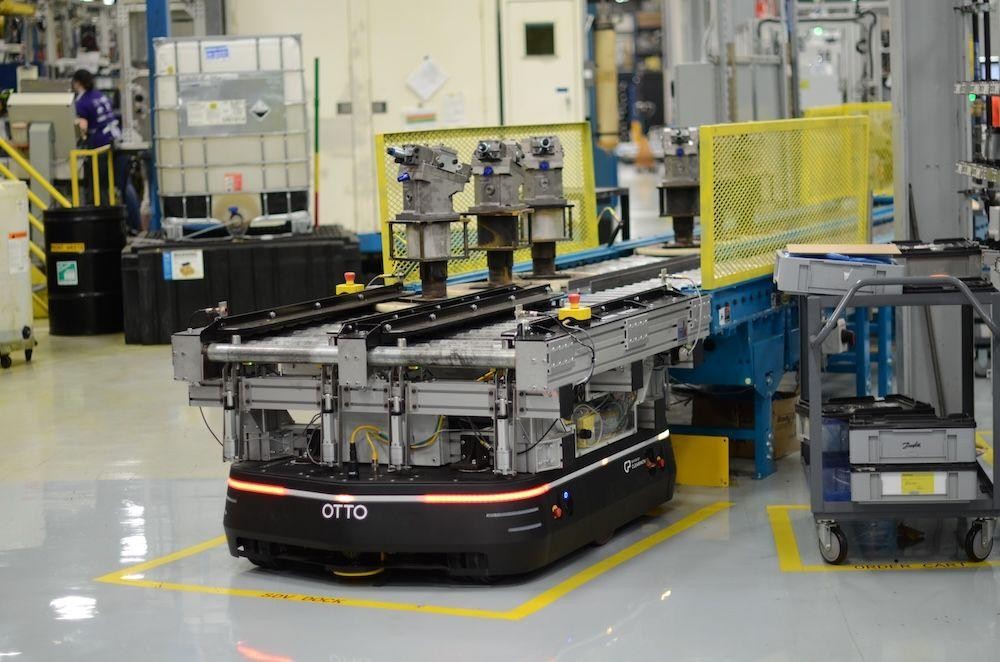
The automotive manufacturer has begun deploying AI-powered AMRs supplied by OTTO, a company owned by Rockwell Automation. The robots are being used inside the body shop to transport heavy racks of components between production areas. Unlike traditional automated guided vehicles that follow fixed magnetic strips or predefined paths, AMRs use technologies including LiDAR, cameras and other sensors to identify obstacles and dynamically navigate the factory floor.
One of the notable capabilities of this system is its ability to handle heavy industrial loads. The robots can transport large racks of components while navigating production areas and delivering materials directly to designated workstations.
The deployment is part of Nissan’s broader effort to improve manufacturing efficiency and reduce unnecessary material handling. The project is being implemented in multiple phases, with the initial application focused on material transportation inside the body shop.
The use of autonomous mobile robots also demonstrates an important change in industrial automation. Modern robots are increasingly expected to interact with their surrounding environment instead of simply following fixed routes. Sensors, mapping technologies, industrial software and artificial intelligence allow AMRs to respond to changing factory conditions and avoid obstacles.
During the implementation of the system, engineering teams also worked on software-related traffic management when multiple robots were operating in the same area. Improving communication and coordination between autonomous robots is an important requirement for large-scale factory automation.
For industrial automation professionals, the Nissan project demonstrates how robotics, sensors, industrial networking and control software are converging inside modern factories. AMRs can operate alongside existing PLC-based production systems while providing flexible material transportation without requiring major changes to the factory floor.
This development is particularly relevant to smart manufacturing. Instead of automating only individual machines, manufacturers are increasingly connecting production equipment, sensors, robots, controllers and software into integrated automation ecosystems.
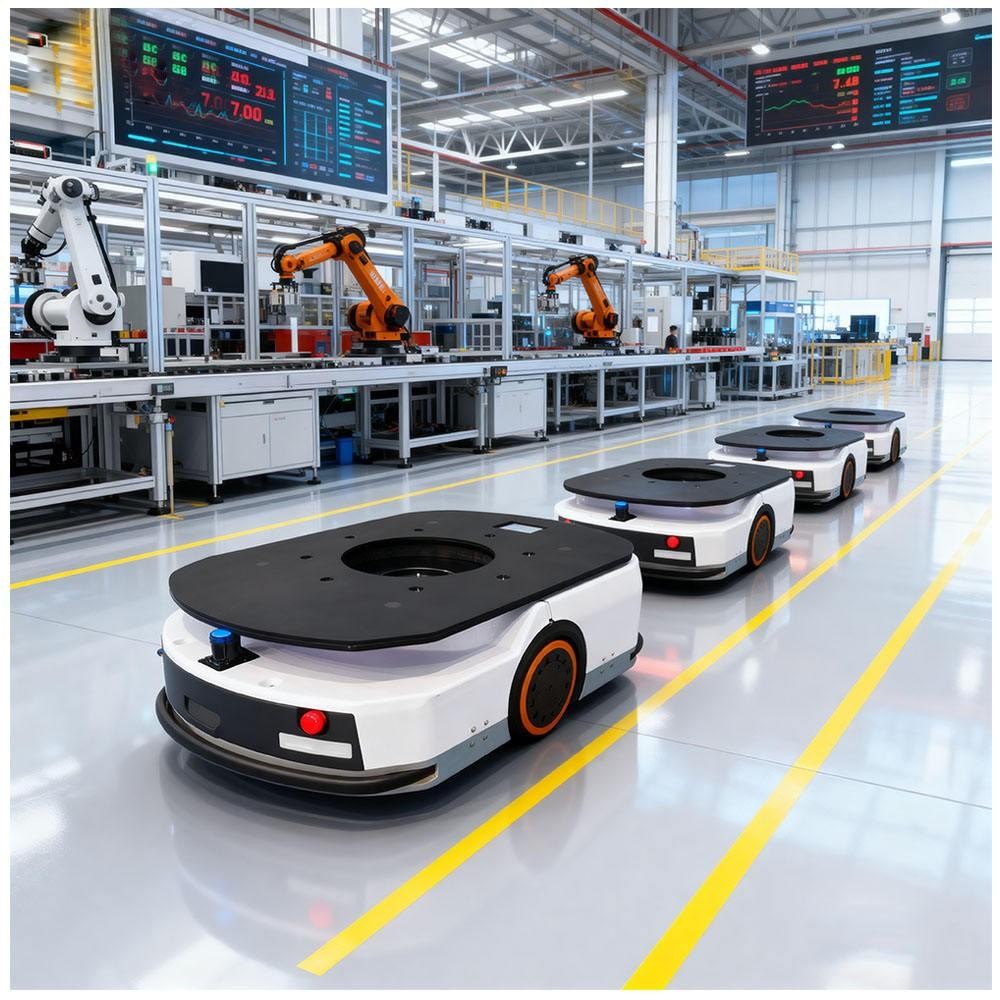
As automotive manufacturers face increasing pressure to improve productivity, reduce operating costs and respond quickly to production changes, AI-powered autonomous mobile robots are expected to become an increasingly important technology in factory automation.
 Schneider Electric Launches Foxboro Software-Defined DCS To Advance Industrial Automation
 Rockwell Automation Introduces FactoryTalk Conductor: A New AI Platform For Industrial Automation
 Rockwell Automation Expands Industrial AI Capabilities With NVIDIA Nemotron Support
 Rockwell Automation Introduces FactoryTalk Conductor To Advance AI-Driven Industrial Automation