100% Original, Ready to Ship!

FANUC M-2000 Robot Advances Automated Aerospace Composite Manufacturing
Advanced industrial robotics is playing an increasingly important role in aerospace manufacturing as aircraft manufacturers look for scalable ways to produce large composite structures with high accuracy and repeatability.
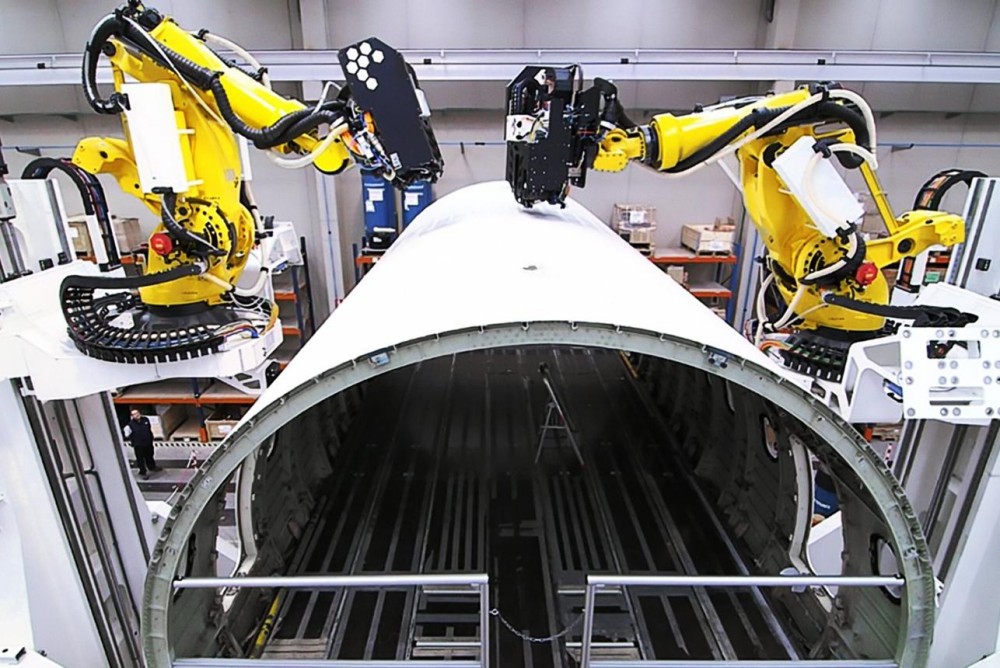
In September 2026, UK-based automation specialist Loop Technology highlighted its FibreLINE manufacturing platform, which uses the FANUC M-2000 high-payload industrial robot to automate the production of large aerospace composite structures.
Aerospace composite manufacturing presents demanding automation requirements. Large components must be processed with high positional accuracy while the automation system also needs to handle heavy tooling and sensitive composite materials. Traditional manufacturing approaches can require substantial factory space and multiple machines, creating challenges when production volumes increase.
The FibreLINE platform is designed to address these requirements through a combination of robotic automation, machine vision, photogrammetry and integrated motion control. At the center of the system is the FANUC M-2000 robot, which provides the payload capacity and rigidity required for large-scale aerospace manufacturing applications.
According to information released about the system, FibreLINE can achieve accuracy of approximately 1 mm across large components when combined with its vision and measurement technologies. The platform is designed to provide a flexible alternative to conventional gantry-based manufacturing equipment.
The system is also intended to support higher-rate aerospace production. Loop Technology states that a single FibreLINE system can provide output equivalent to approximately five to ten conventional manufacturing machines in certain applications. This type of automation architecture can potentially reduce factory footprint while increasing production capacity.
The development is significant for industrial automation because it demonstrates how large industrial robots can move beyond conventional material handling, welding and assembly applications into highly demanding composite manufacturing processes.
Modern aerospace automation increasingly depends on multiple technologies working together. Robot controllers provide motion control, vision systems supply positional information, measurement systems verify accuracy, while PLCs and industrial networks coordinate auxiliary equipment and production sequences.
This type of integrated architecture is also relevant to other industries handling large and complex components, including automotive, wind energy, shipbuilding and advanced transportation equipment.
The use of robotics in composite manufacturing highlights a wider industry trend toward flexible automation. Instead of designing production systems around one fixed process, manufacturers can combine robots, sensors, machine vision and digital control technologies to create production cells that can be adapted for different components.
As aerospace production programs demand higher output without compromising quality, high-payload robots such as the FANUC M-2000 provide another option for automating processes that traditionally required large dedicated machinery.
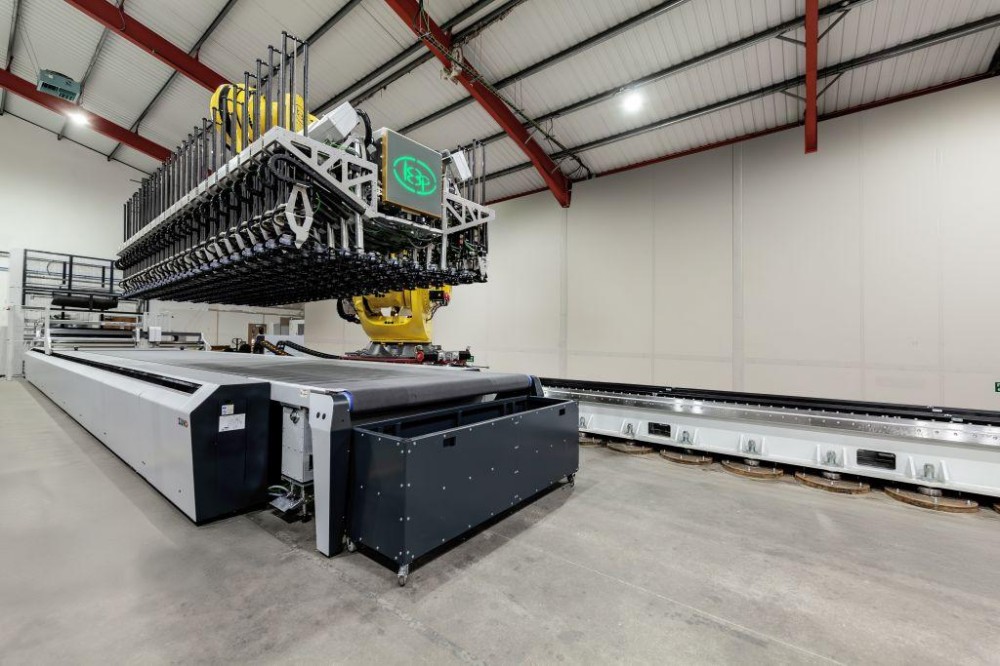
The FibreLINE development illustrates how industrial robotics, machine vision and advanced motion control are becoming increasingly interconnected. For manufacturers and automation integrators, this trend creates new opportunities to apply PLC, robotic and digital manufacturing technologies to large-scale precision production.
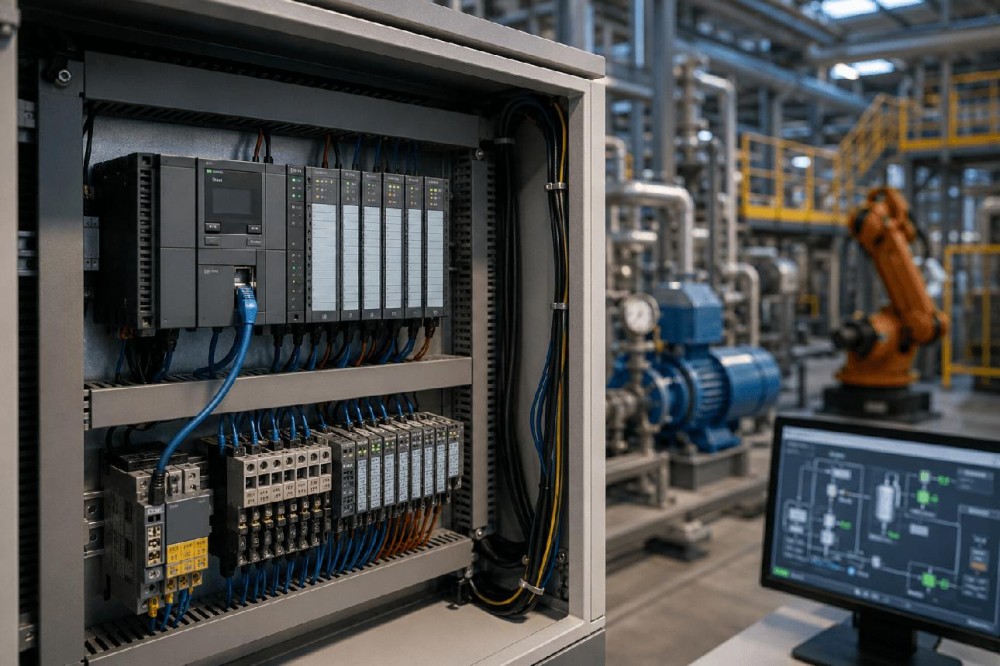 Rockwell Automation Introduces FactoryTalk Conductor: A New AI Platform For Industrial Automation
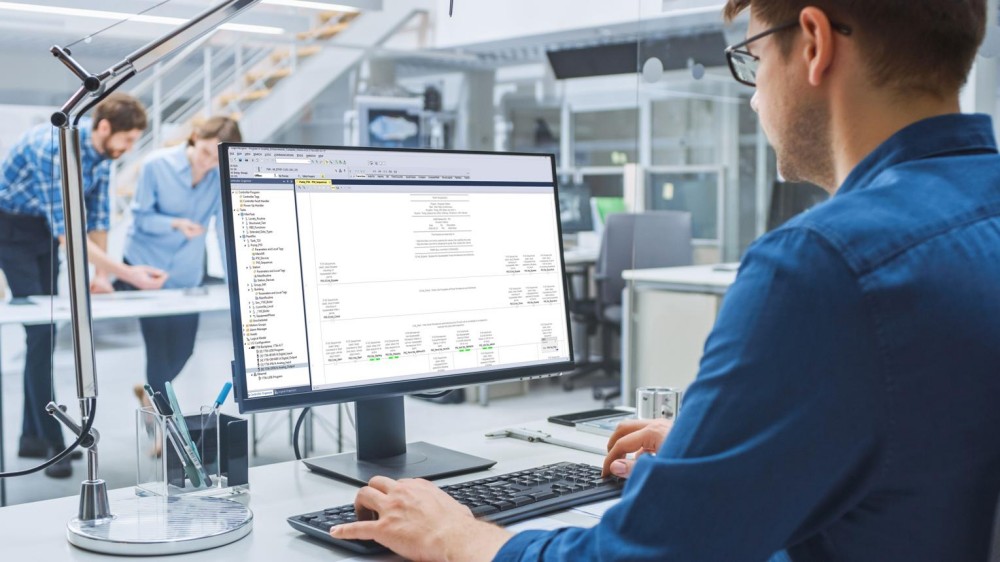 Rockwell Automation Expands Industrial AI Capabilities With NVIDIA Nemotron Support
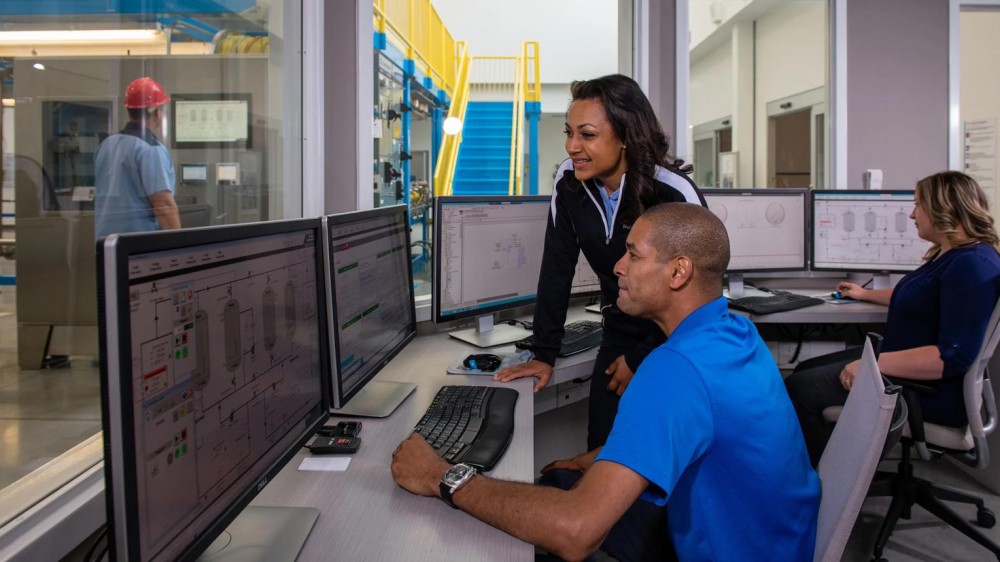 Rockwell Automation Introduces FactoryTalk Conductor To Advance AI-Driven Industrial Automation
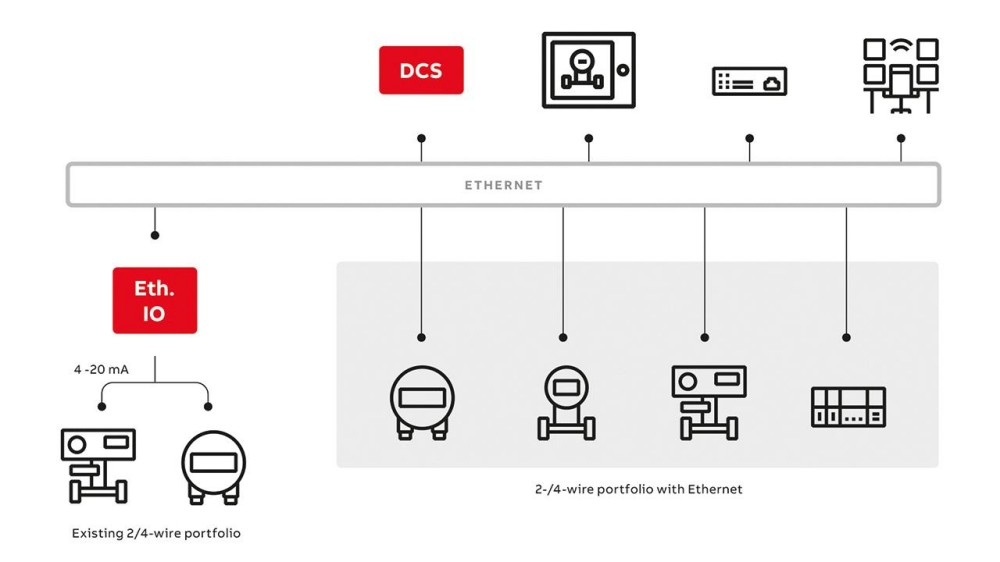 ABB And Boliden Advance DCS Modernization With Ethernet-APL Industrial Automation