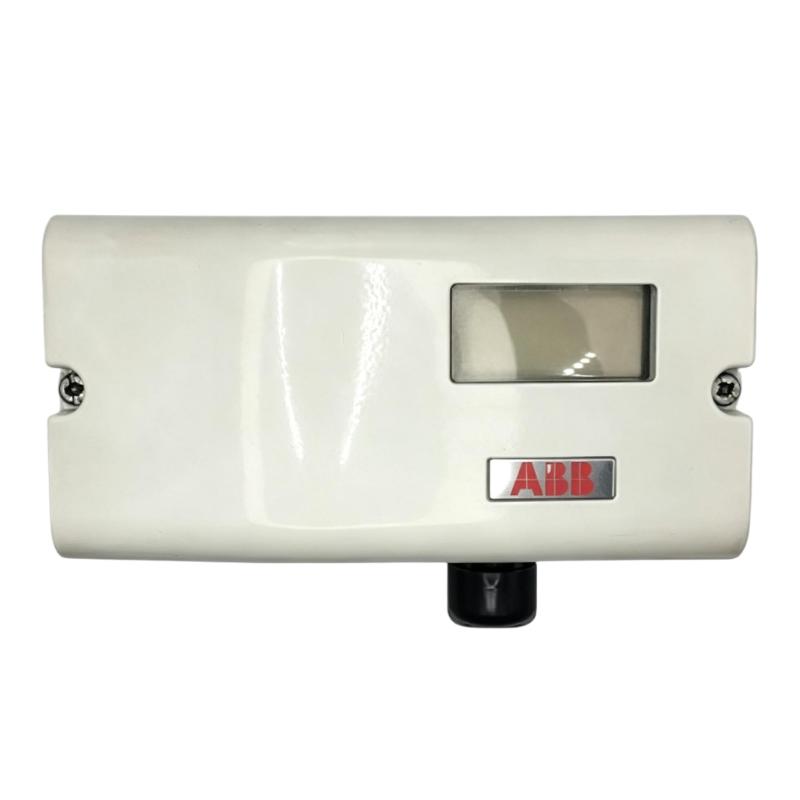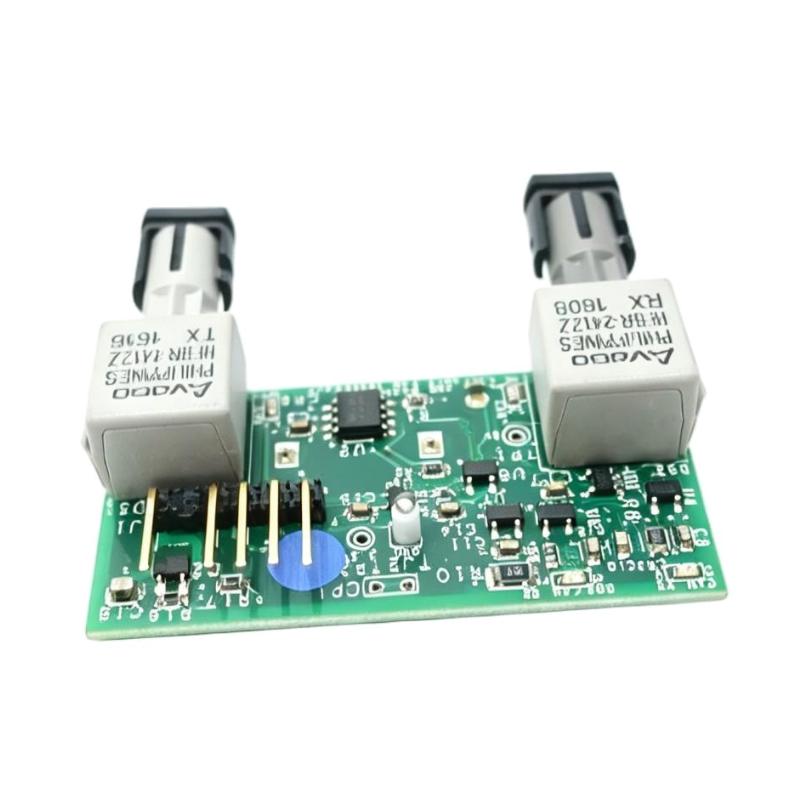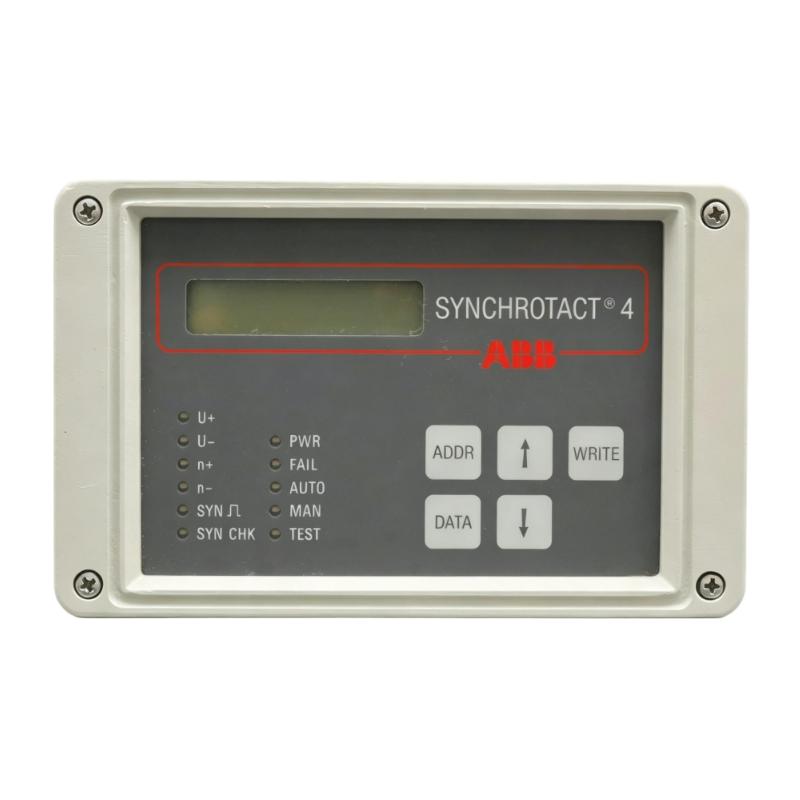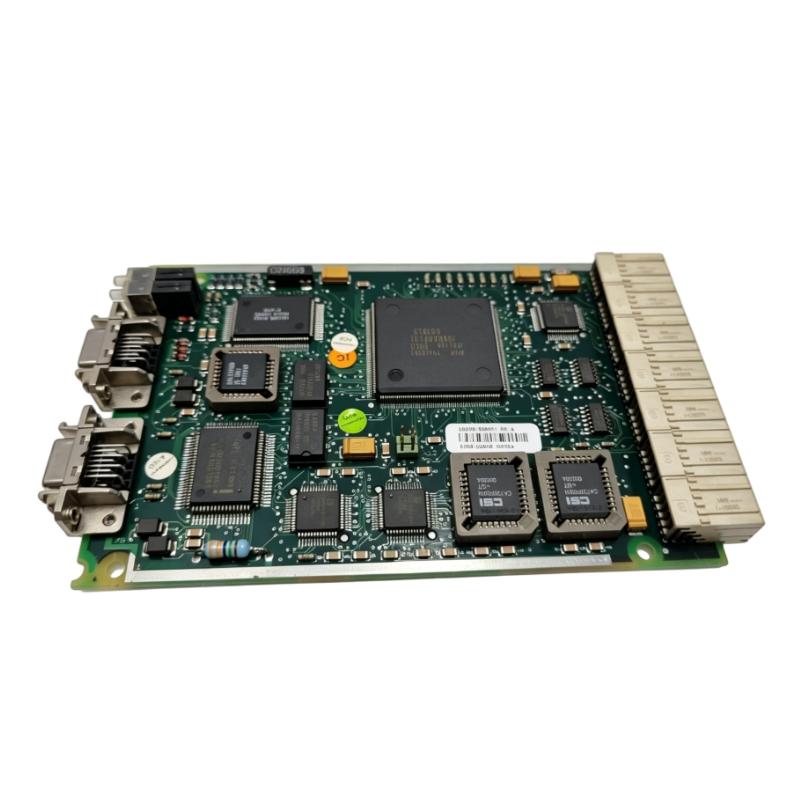
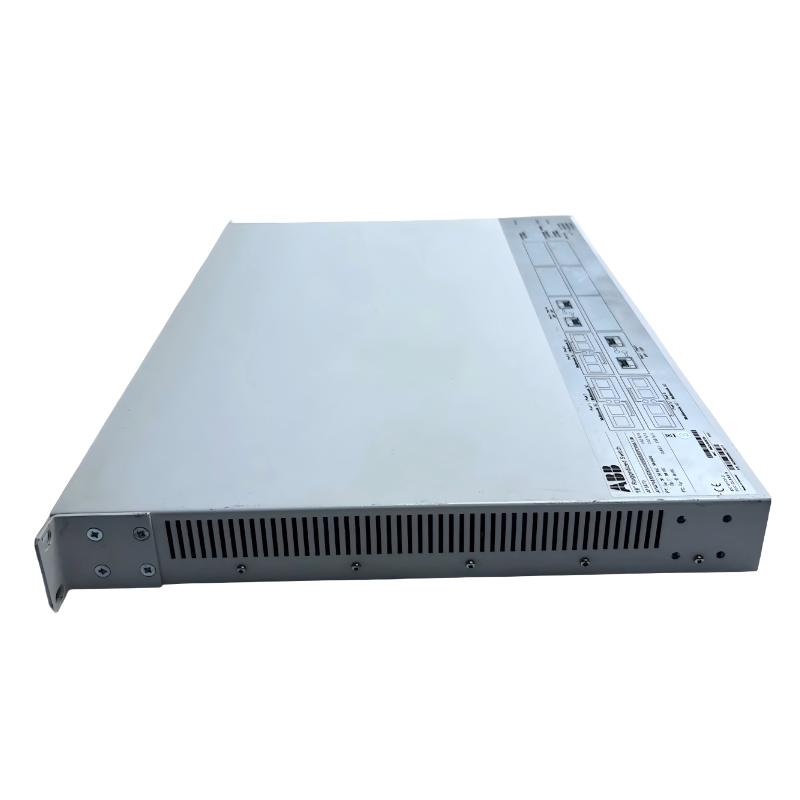
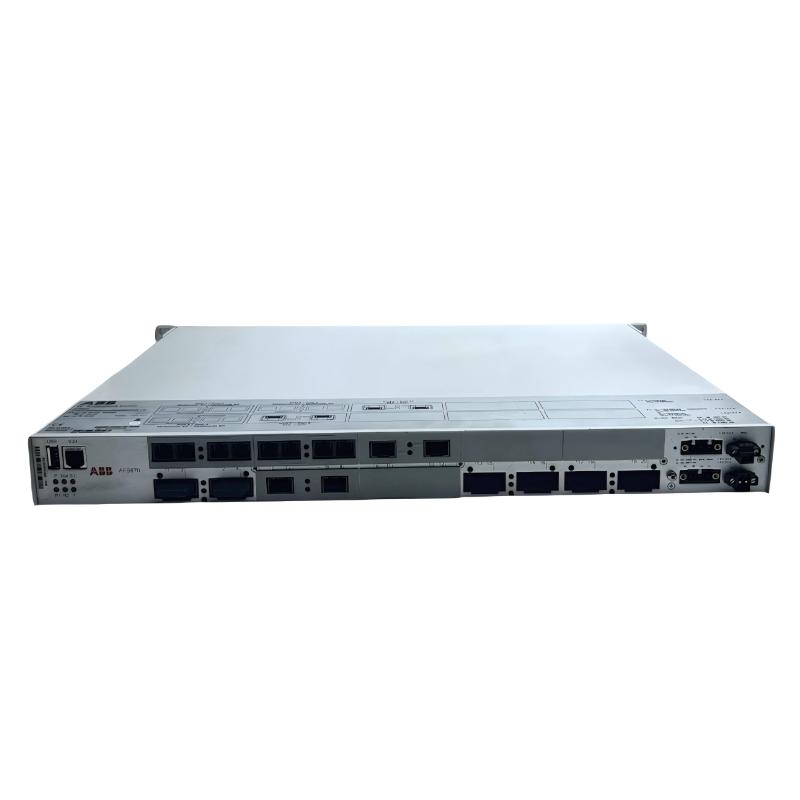
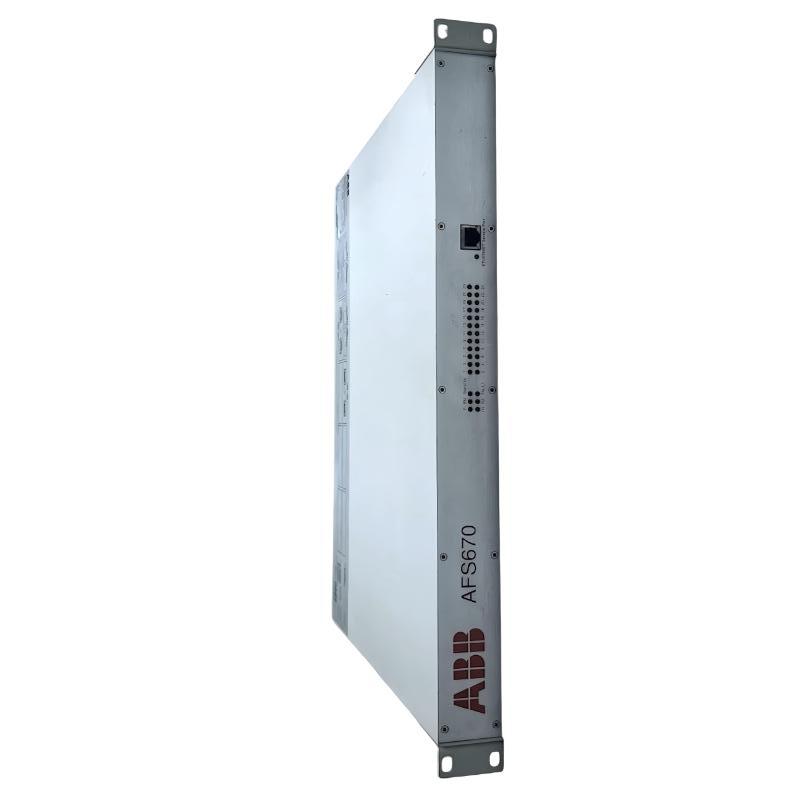
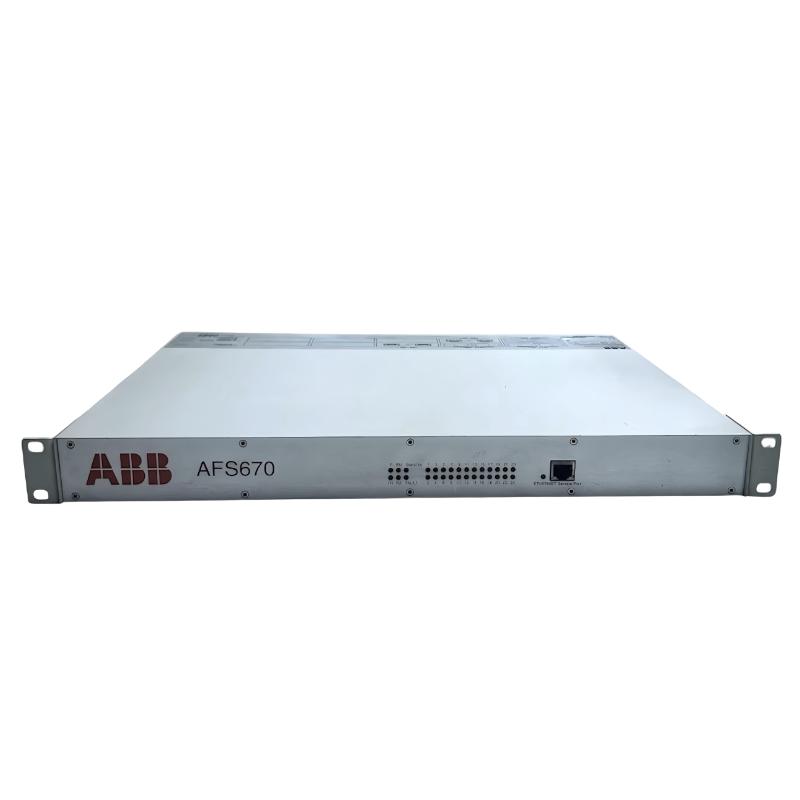
ABB AFS670 Ethernet Switch
| Company Information | ||||||||
| [email protected] | ||||||||
| Mobile | +8613666084105 | |||||||
| +8613666084105 | ||||||||
| 13666084105 | ||||||||
| Add to | Room 1004, No. 62 Xiangxiu Li, Siming District, Xiamen City, Fujian Province, China | |||||||
 Technical Specifications
| Parameter | Specification |
|---|---|
| Model | AFS670 |
| Product Type | Managed Ethernet Switch |
| Manufacturer | ABB |
| Product Series | AFS Series |
| Switch Type | Industrial Managed Ethernet Switch |
| Mounting | 19-inch rack mounting |
| Housing | Metal housing |
| Design | Industrial ruggedized, fanless design |
| Switching Method | Store-and-Forward |
| Ethernet Ports | Up to 24 Fast Ethernet ports, depending on configuration |
| Gigabit Ethernet | Up to 4 GbE ports |
| Fast Ethernet Speed | 10/100 Mbit/s |
| Gigabit Ethernet Speed | 10/100/1000 Mbit/s |
| Port Types | RJ45, SFP, fiber-optic and configurable modular interfaces |
| Optical Interfaces | Multimode and singlemode fiber options available |
| SFP Support | Supports configurable SFP interfaces |
| Power over Ethernet | Optional, up to 4 PoE ports depending on power-supply configuration |
| Network Management | Managed Ethernet switching and network management |
| RSTP | Supported |
| SNTP | Supported |
| PTPv2 | Not supported on standard AFS670 configuration |
| Station Bus | Supported |
| Process Bus | Not supported |
| Redundant Power Supply | Supported depending on configuration |
| Typical Power Consumption | Approximately 10–40 W without PoE |
| Low-Voltage Supply | 18–60 V DC, depending on power-supply configuration |
| High-Voltage Supply | 77–300 V DC or 90–265 V AC, depending on configuration |
| Operating Temperature | Depending on configuration, standard 0–60 °C or extended -40–85 °C |
| Relative Humidity | 5–95%, non-condensing |
| Protection Class | IP30 |
| Signal Contact | Alarm/status signal contact available |
| Management Interface | Ethernet management and V.24 interface depending on configuration |
| Typical Application | Substation automation, industrial Ethernet and power automation |
| Network Application | Station bus and industrial control network communication |
| Expansion | Modular port configuration |
| Installation | 19-inch control cabinet |
| Dimensions | 448 × 44 × 310 mm |
| Weight | 4 kg |
FAQ
1. What is the main function of the ABB AFS670 Ethernet Switch?
ABB AFS670 is an industrial managed Ethernet switch designed to provide reliable network communication between automation, protection, control and monitoring devices. Unlike a basic unmanaged Ethernet switch, the AFS670 provides network management functions that allow communication traffic and network behavior to be controlled more effectively. It is particularly suited to industrial and electrical automation environments where network availability and predictable communication are important. The switch supports Fast Ethernet and, depending on the selected hardware configuration, up to four Gigabit Ethernet interfaces. Different combinations of copper Ethernet, optical fiber and SFP interfaces can be used to match the communication requirements of a particular installation. The AFS670 can also support redundant power arrangements and optional PoE functionality in suitable configurations, making it useful for installations where continuous network operation is important.
2. How many Ethernet ports can the AFS670 support?
The AFS670 is a modular Ethernet switch and can be configured with a range of Ethernet port combinations. The platform can provide up to 24 Fast Ethernet ports together with up to four Gigabit Ethernet ports, depending on the selected hardware configuration. Fast Ethernet ports can use copper RJ45 connections, M12 connections or different optical interfaces, while Gigabit interfaces can be provided through copper Ethernet, SFP or combination ports. Because the AFS670 uses a modular architecture, the exact number and type of ports depends on the complete product configuration rather than the basic AFS670 model designation alone. When selecting or replacing an AFS670, the full configuration should therefore be checked carefully. Matching the number, media type and speed of the original ports is important because an apparently identical base switch may have a different installed port configuration.
3. Can the ABB AFS670 use fiber-optic Ethernet connections?
Yes. The AFS670 supports a wide range of optical Ethernet configurations. Depending on the installed interface modules, the switch can use multimode or singlemode fiber connections, including interfaces such as SC, ST and LC, as well as SFP-based connections. Fiber-optic Ethernet is particularly useful in substations and industrial environments where long communication distances, electromagnetic interference or electrical isolation are important considerations. SFP-based interfaces also provide additional flexibility because the optical transceiver can be selected according to the required fiber type and transmission distance. When configuring an optical connection, technicians should verify the fiber type, connector type, optical wavelength and transceiver compatibility at both ends of the link. If an optical link does not establish communication, the fiber itself, SFP module, connector cleanliness, transmit/receive orientation and configuration should all be checked rather than assuming that the switch hardware has failed.
4. Does the AFS670 support redundant power supplies?
Yes. The AFS670 platform can be configured with redundant power supplies, which is an important feature for industrial and electrical automation networks where network availability is critical. With a redundant power configuration, the switch can continue operating if one power source or power-supply unit becomes unavailable, provided the remaining supply is correctly connected and capable of supporting the load. This arrangement helps reduce the possibility of a single power-supply failure interrupting network communication. The exact supply voltage range and redundancy arrangement depend on the selected AFS670 configuration. When commissioning a redundant installation, both power inputs should be checked independently, and technicians should verify that the switch remains operational when one supply is removed according to the approved maintenance procedure. The power-failure alarm or signal contact should also be checked where it is used by the supervisory system, allowing a failed power source to be detected before complete loss of the network occurs.
5. What network redundancy protocol does the ABB AFS670 support?
The AFS670 supports RSTP, or Rapid Spanning Tree Protocol, which can be used to provide network redundancy and help prevent Ethernet switching loops. In an industrial network, redundant communication paths can improve availability because an alternative path may remain available when a network connection or switch segment fails. RSTP manages these redundant paths by determining which links should be active and which should remain in a standby state to prevent network loops. When a failure occurs, the topology can be recalculated and an alternative path can be activated. Proper RSTP configuration is important because incorrect bridge priorities, port settings or network topology can produce unexpected behavior. During commissioning, technicians should verify the intended network topology and confirm that the RSTP configuration is consistent across interconnected switches. The AFS670 should also be tested under controlled conditions to verify that communication recovers correctly after the intended redundant link is interrupted.
6. Can the AFS670 be used in substation automation networks?
Yes. The AFS670 is designed for industrial and electrical automation applications and can be used in substation communication networks, including station-bus applications. Its ruggedized construction, managed Ethernet functions, optical interface options and redundant power capabilities make it suitable for environments where reliable communication between protection, control and monitoring equipment is required. Depending on the exact configuration, the switch can connect devices through copper or fiber-optic Ethernet interfaces and can provide multiple network segments within a single cabinet. RSTP support can also be used where a redundant Ethernet topology is required. When deploying an AFS670 in a substation, the network design should take into account communication priorities, redundancy requirements, electromagnetic environment, fiber or copper media selection and power availability. The exact switch configuration should be selected according to the required communication architecture rather than simply choosing the maximum number of available ports.
7. What should be checked when an AFS670 Ethernet port stops communicating?
When an AFS670 port stops communicating, troubleshooting should begin with the physical connection. For a copper port, check the Ethernet cable, connector, link indicators and connected device. For an optical port, inspect the fiber connection, SFP module, connector condition and transmit/receive orientation. The port speed and interface configuration should then be checked to make sure the connected devices are using compatible communication parameters. If the physical layer is functioning, the network configuration should be reviewed, including VLAN settings, port status, RSTP configuration and management parameters where applicable. Network traffic can also be checked to determine whether the problem is isolated to one port or affects an entire network segment. If several ports stop communicating simultaneously, the technician should investigate the switch power supply, system status and upstream network connections before replacing the switch. A single failed port is more likely to involve the port interface, cable, transceiver or connected equipment, while a complete communication loss may indicate a power or system-level problem.
8. What precautions should be taken when replacing an ABB AFS670?
Before replacing an AFS670, the complete switch configuration should be documented, including port assignments, network parameters, RSTP settings, VLAN-related settings, optical interfaces and power-supply connections where applicable. The exact hardware configuration is especially important because AFS670 switches can be equipped with different combinations of copper, optical, SFP, Gigabit and optional PoE interfaces. The replacement unit should therefore match not only the AFS670 model but also the required port configuration and power arrangement. Before removing the existing switch, all connected cables should be clearly identified to prevent incorrect reconnection. Power should be isolated according to the site’s electrical safety procedure. After installation, each Ethernet link should be checked individually, followed by verification of network management functions and redundancy behavior. If RSTP is used, the network should be monitored after startup to confirm that the intended topology has been established and that no unexpected network loop exists. For critical automation networks, communication with connected protection, control and monitoring equipment should be verified before the system is returned to normal operation.
ABB AFS670 Ethernet Switch is in stock. Please contact us for a quick quote and competitive pricing.
| Company Information | ||||||||
| [email protected] | ||||||||
| Mobile | +8613666084105 | |||||||
| +8613666084105 | ||||||||
| 13666084105 | ||||||||
| Add to | Room 1004, No. 62 Xiangxiu Li, Siming District, Xiamen City, Fujian Province, China | |||||||
Company Introduction
Xiamen Shengruite Trading Co., Ltd. is a company specializing in the supply of industrial PLC spare parts.
We provide high-quality PLC spare parts to customers in the global manufacturing, energy and power, chemical and other fields.
Since its establishment in 2011, after 13 years of rapid development, the cumulative global shipments have reached 223,650 pieces, with an annual output value of US$50 million.
Successfully served more than 500 customers in more than 100 countries and regions including Saudi Arabia, UAE, the United States, Europe, Africa, and Southeast Asia
Our Mission
Provide customers with the best quality PLC spare parts and the fastest delivery service to ensure that their industrial automation systems are always in the best operating condition.
We provide a 1-year warranty service, and we support returns and exchanges for any issues to ensure your rights and interests are fully protected.
We can provide detailed product images upon request, and our team can arrange warehouse photos for confirmation to ensure you have all the information you need before making a purchase.
Shipping times vary depending on your location. With the support of our 16 global warehouses, we strive to deliver orders as quickly as possible. Contact us to get an estimated delivery time for your specific location.
The minimum order quantity (MOQ) is typically one unit. However, for larger orders, please contact us for potential discounts and pricing details.
Yes, we offer competitive pricing for bulk purchases. Please reach out to our sales team with the specifics of your order to receive a custom quote.
We accept various payment methods for wholesale orders, including bank transfers (T/T), letters of credit, and other options upon agreement. For large transactions, please contact us directly for payment terms.
Yes, we offer flexible ordering options for both small and large quantities. Whether youre looking for a single unit or a large batch, we can accommodate your needs.
We occasionally offer promotional discounts for new wholesale customers. Contact us to learn more about any current offers available for first-time buyers.
If you are unsure of compatibility with your existing setup please provide your system details and our support team can verify compatibility prior to purchase.
Returns are accepted within 30 days if the product is unused, unopened, and in its original packaging. Please note that return shipping and associated costs are the buyer\\\\\\\\\\\\\\\\\\\\\\\\\\\\\\\\\\\\\\\\\\\\\\\\\\\\\\\\\\\\\\\\\\\\\\\\\\\\\\\\\\\\\\\\\\\\\\\\\\\\\\\\\\\\\\\\\\\\\\\\\\\\\\\\\\\\\\\\\\\\\\\\\\\\\\\\\\\\\\\\\\\\\\\\\\\\\\\\\\\\\\\\\\\\\\\\\\\\\\\\\\\\\\\\\\\\\\\\\\\\\\\\\\\\\\\\\\\\\\\\\\\\\\\\\\\\\\\\\\\\\\\\\\\\\\\\\\\\\\\\\\\\\\\\\\\\\\\\\\\\\\\\\\\\\\\\\\\\\\\\\\\\\\\\\\\\\\\\\\\\\\\\\\\\\\\\\\\\\\\\\\\\\\\\\\\\\\\\\\\\\\\\\\\\\\\\\\\\\\\\\\\\\\\\\\\\\\\\\\\\\\\\\\\\\\\\\\\\\\\\\\\\\\\\\\\\\\\\\\\\\\\\\\\\\\\\\\\\\\\\\\\\\\\\\\\\\\\\\\\\\\\\\\\\\\\\\\\\\\\\\\\\\\\\\\\\\\\\\\\\\\\\\\\\\\\\\\\\\\\\\\\\\\\\\\\\\\\\\\\\\\\\\\\\\\\\\\\\\\\\\\\\\\\\\\\\\\\\\\\\\\\\\\\\\\\\\\\\\\\\\\\\\\\\\\\\\\\\\\\\\\\\\\\\\\\\\\\\\\\\\\\\\\\\\\\\\\\\\\\\\\\\\\\\\\\\\\\\\\\\\\\\\\\\\\\\\\\\\\\\\\\\\\\\\\\\\\\\\\\\\\\\\\\\\\\\\\\\\\\\\\\\\\\\\\\\\\\\\\\\\\\\\\\\\\\\\\\\\\\\\\\\\\\\\\\\\\\\\\\\\\\\\\\\\\\\\\\\\\\\\\\\\\\\\\\\\\\\\\\\\\\\\\\\\\\\\\\\\\\\\\\\\\\\\\\\\\\\\\\\\\\\\\\\\\\\\\\\\\\\\\\\\\\\\\\\\\\\\\\\\\\\\\\\\\\\\\\\\\\\\\\\\\\\\\\\\\\\\\\\\\\\\\\\\\\\\\\\\\\\\\\\\\\\\\\\\\\\\\\\\\\\\\\\\\\\\\\\\\\\\\\\\\\\\\\\\\\\\\\\\\\\\\\\\\\\\\\\\\\\\\\\\\\\\\\\\\\\\\\\\\\\\\\\\\\\\\\\\\\\\\\\\\\\\\\\\\\\\\\\\\\\\\\\\\\\\\\\\\\\\\\\\\\\\\\\\\\\\\\\\\\\\\\\\\\\\\\\\\\\\\\\\\\\\\\\\\\\\\\\\\\\\\\\\\\\\\\\\\\\\\\\\\\\\\\\\\\\\\\\\\\\\\\\\\\\\\\\\\\\\\\\\\\\\\\\\\\\\\\\\\\\\\\\\\\\\\\\\\\\\\\\\\\\\\\\\\\\\\\\\\\\\\\\\\\\\\\\\\\\\\\\\\\\\\\\\\\\\\\\\\\\\\\\\\\\\\\\\\\\\\\\\\\\\\\\\\\\\\\\\\\\\\\\\\\\\\\\\\\\\\\\\\\\\\\\\\\\\\\\\\\\\\\\\\\\\\\\\\\\\\\\\\\\\\\\\\\\\\\\\\\\\\\\\\\\\\\\\\\\\\\\\\\\\\\\\\\\\\\\\\\\\\\\\\\\\\\\\\\\\\\\\\\\\\\\\\\\\\\\\\\\\\\\\\\\\\\\\\\\\\\\\\\\\\\\\\\\\\\\\\\\\\\\\\\\\\\\\\\\\\\\\\\\\\\\\\\\\\\\\\\\\\\\\\\\\\\\\\\\\\\\\\\\\\\\\\\\\\\\\\\\\\\\\\\\\\\\\\\\\\\\\\\\\\\\\\\\\\\\\\\\\\\\\\\\\\\\\\\\\\\\\\\\\\\\\\\\\\\\\\\\\\\\\\\\\\\\\\\\\\\\\\\\\\\\\\\\\\\\\\\\\\\\\\\\\\\\\\\\\\\\\\\\\\\\\\\\\\\\\\\\\\\\\\\\\\\\\\\\\\\\\\\\\\\\\\\\\\\\\\\\\\\\\\\\\\\\\\\\\\\\\\\\\\\\\\\\\\\\\\\\\\\\\\\\\\\\\\\\\\\\\\\\\\\\\\\\\\\\\\\\\\\\\\\\\\\\\\\\\\\\\\\\\\\\\\\\\\\\\\\\\\\’s responsibility.
Yes, we offer technical support for the installation and integration of our products. Our team can assist with setup, configuration, and troubleshooting to ensure a smooth installation.