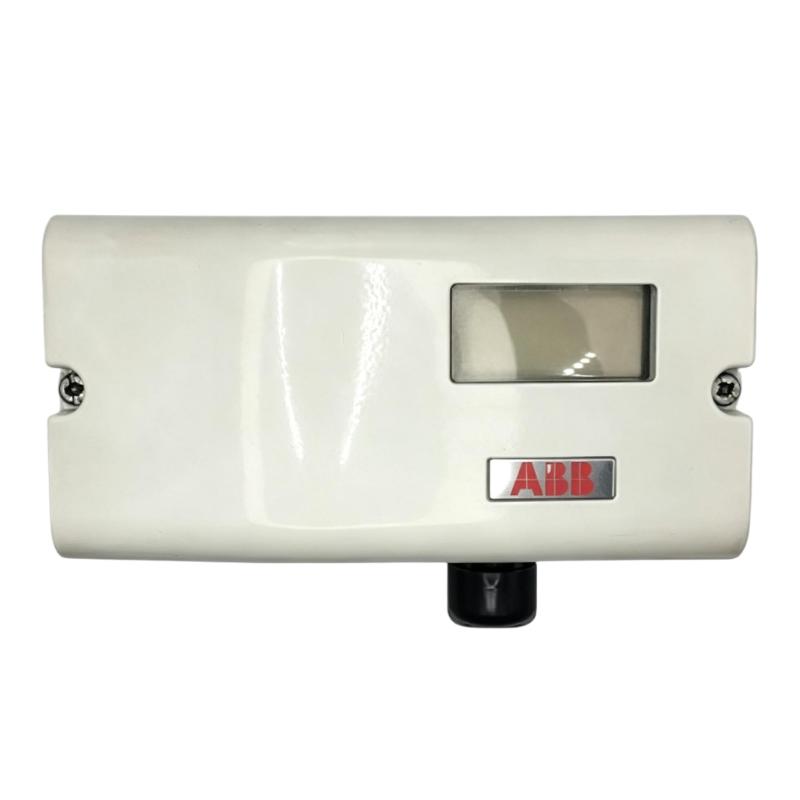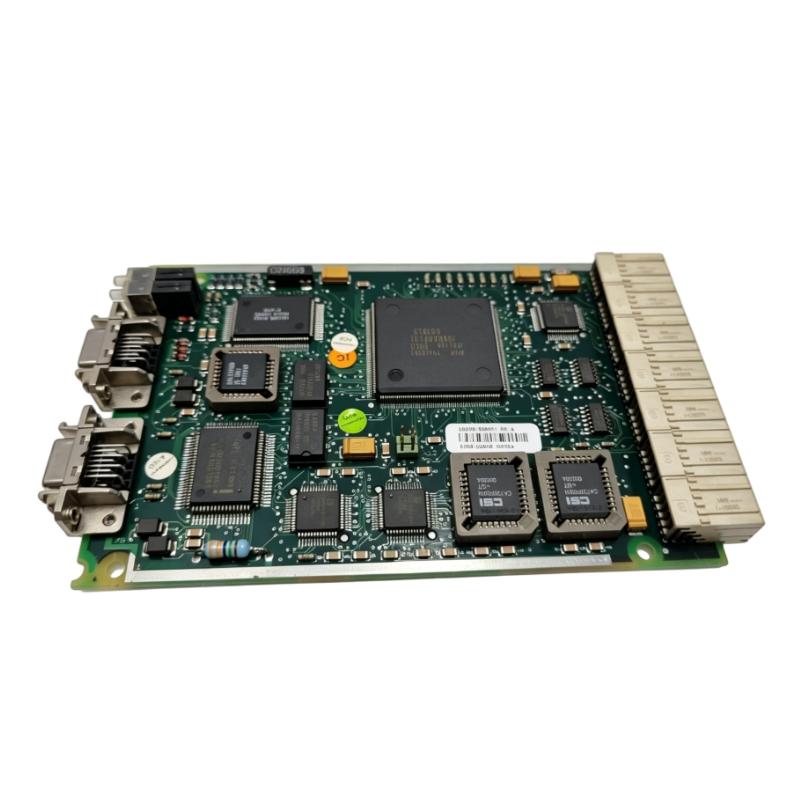
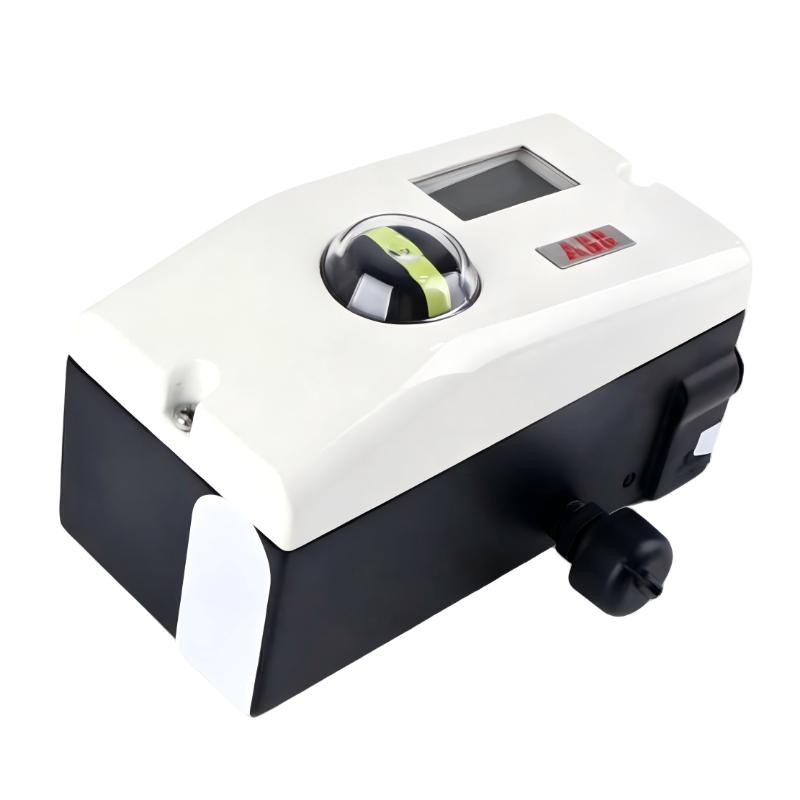
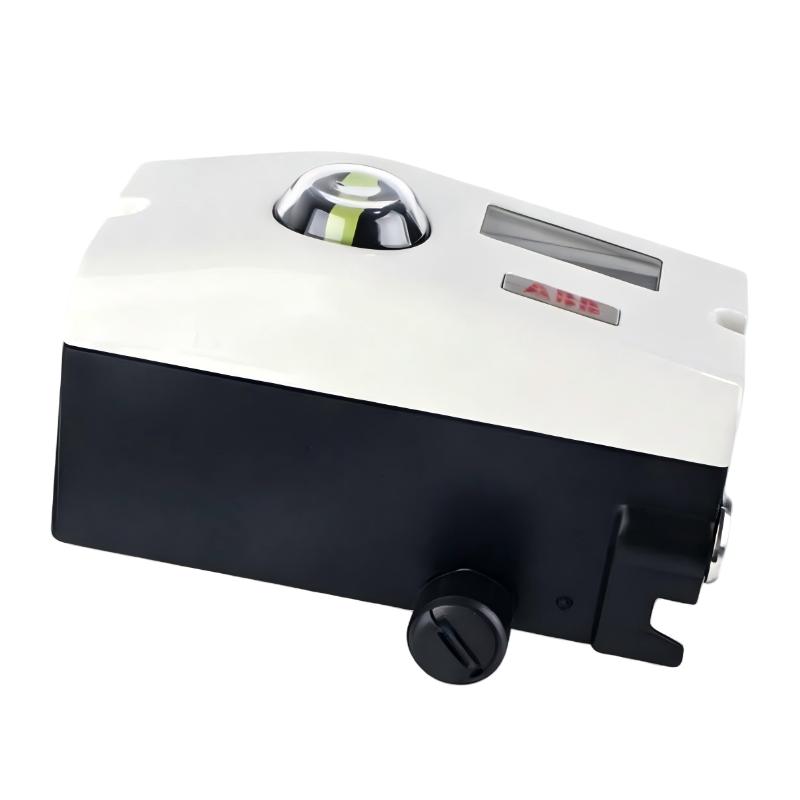
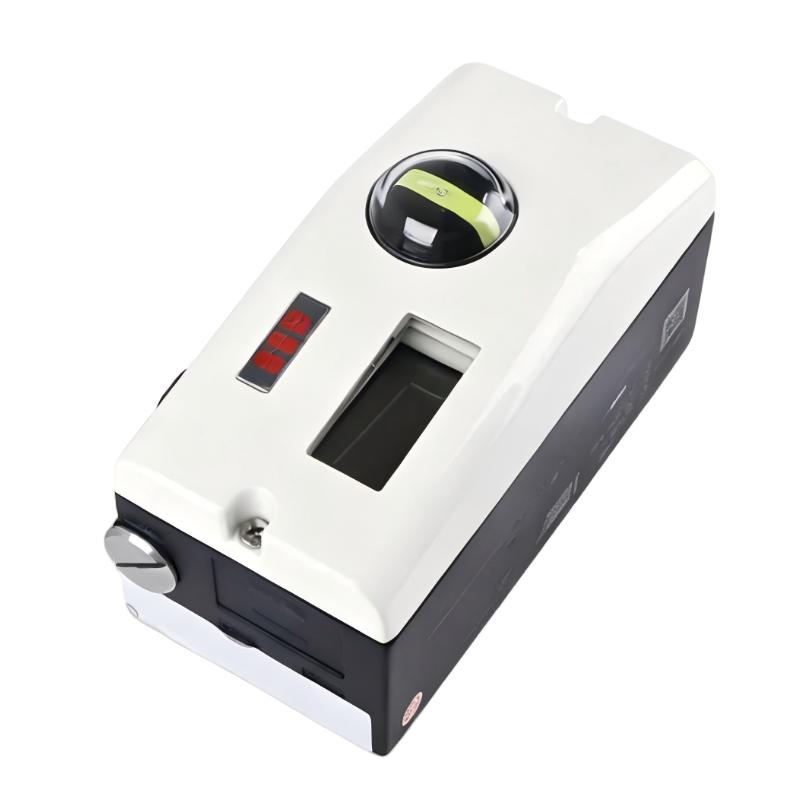
ABB V18345-1010120001 Valve Positioner
| Company Information | ||||||||
| [email protected] | ||||||||
| Mobile | +8613666084105 | |||||||
| +8613666084105 | ||||||||
| 13666084105 | ||||||||
| Add to | Room 1004, No. 62 Xiangxiu Li, Siming District, Xiamen City, Fujian Province, China | |||||||
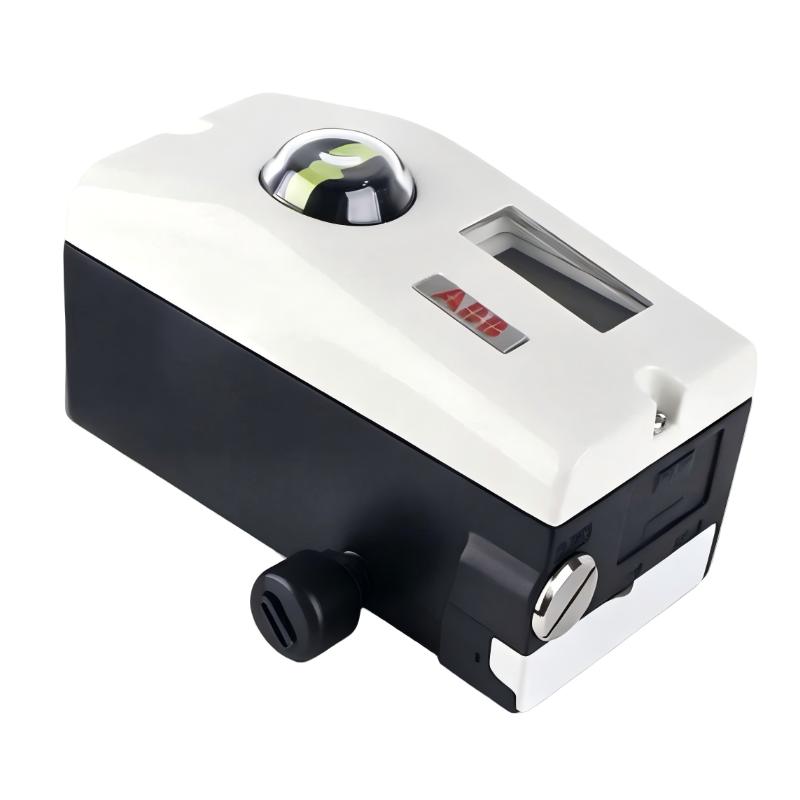 Technical Specifications
| Parameter | Specification |
|---|---|
| Manufacturer | ABB |
| Model | V18345-1010120001 |
| Product Type | Valve Positioner |
| Positioner Type | Intelligent Electro-Pneumatic Valve Positioner |
| Series | TZIDC |
| Input Signal | 4–20 mA, 2-wire |
| Communication | LKS interface; communication functions depend on configuration |
| Main Function | Valve position detection, positioning, and pneumatic actuator control |
| Actuator Type | Pneumatic linear or rotary actuator |
| Pneumatic Output | For pneumatic actuator control |
| Installation | Industrial control valve and pneumatic actuator installation |
| Application | Industrial process control, automation, and control valve positioning |
| Housing Material | Aluminum alloy |
| Protection Rating | IP65 |
| Dimensions | 168.5 × 101 × 114.5 mm |
| Weight | 1.7 kg |
FAQ
1. What is the main function of the ABB V18345-1010120001 Valve Positioner?
The ABB V18345-1010120001 is an intelligent valve positioner from the TZIDC series, designed to provide accurate positioning of pneumatic control valves. It receives a control signal from an automation or process control system and compares the requested valve position with the actual mechanical position. Based on the difference between these two values, the positioner adjusts the pneumatic output to the actuator so that the valve moves toward the required position. This closed-loop positioning principle helps improve valve response, positioning accuracy, and process stability. In industrial applications, the positioner can be used where accurate control of flow, pressure, temperature, or other process variables depends on reliable valve movement. Its actual operating functions depend on the configured valve, actuator, feedback arrangement, and control system.
2. What input signal does the V18345-1010120001 use?
The V18345-1010120001 is designed for a standard 4–20 mA, 2-wire control signal. This signal is commonly provided by a PLC, DCS, or other process controller and represents the desired valve position. The positioner interprets the current signal and converts it into an appropriate pneumatic control action for the connected actuator. The 4–20 mA standard is widely used in industrial environments because it provides reliable analog transmission over control wiring and allows the system to distinguish between normal operating signals and certain loop faults. During installation and commissioning, the signal wiring, polarity, loop configuration, and controller output should be checked carefully to ensure that the positioner receives the intended command.
3. What types of actuators can the ABB V18345-1010120001 be used with?
The V18345-1010120001 belongs to the ABB TZIDC intelligent positioner family and can be configured for applications involving pneumatic linear or rotary actuators, depending on the specific configuration and mounting arrangement. The positioner controls the actuator by regulating pneumatic output and uses a feedback mechanism to determine the actual position. Correct mechanical compatibility is important because different valve and actuator designs may require different mounting hardware, feedback mechanisms, or adjustment procedures. Before installation, the technician should confirm the actuator type, valve travel or rotation, feedback arrangement, and positioner configuration. A positioner should not be considered directly interchangeable simply because its external appearance or connection arrangement is similar.
4. How should the V18345-1010120001 be diagnosed when valve positioning is abnormal?
Troubleshooting should begin by checking whether the control system is producing the expected 4–20 mA command. The input loop should be measured to determine whether the positioner is receiving a stable and correct signal. The instrument-air supply should then be checked for adequate pressure and stable operation, while pneumatic tubing and fittings should be inspected for leakage, blockage, contamination, or loose connections. The actuator and valve mechanism should also be checked to make sure the valve can move freely without excessive friction or mechanical obstruction. If the electrical signal, air supply, and mechanical assembly are all operating correctly but the valve still fails to follow the command, further inspection of the positioner’s feedback system, calibration, pneumatic components, and internal operation may be necessary. Following a structured diagnostic sequence helps prevent unnecessary replacement of a positioner when the actual fault is located elsewhere in the control loop.
5. Why is automatic adjustment or calibration important for the V18345-1010120001?
Calibration and adjustment establish the correct relationship between the control signal, the valve’s actual position, and the actuator’s movement. If these parameters are not correctly established, the controller may request a particular valve position while the physical valve remains at a different position. This can lead to poor process regulation, inaccurate flow control, unstable pressure or temperature, excessive actuator movement, or slow response. The intelligent TZIDC platform provides functions intended to simplify commissioning and adaptation to the connected final control element. After installing a new positioner, replacing an actuator, changing valve linkage, or performing significant maintenance, the valve position range and control response should be verified. Proper adjustment is especially important in critical process applications where small positioning errors can have a noticeable effect on overall process performance.
6. What can cause abnormal pneumatic output from the V18345-1010120001?
Abnormal pneumatic output can have several possible causes. An insufficient or unstable instrument-air supply is one of the first conditions that should be checked. Contaminated air, blocked pneumatic passages, leaking tubing, damaged fittings, or incorrect pneumatic connections can also prevent the positioner from generating the expected actuator pressure. An incorrect 4–20 mA input can produce an incorrect pneumatic command even when the positioner itself is functioning normally. In addition, problems with the actuator, valve stem, mechanical linkage, or valve packing can make the system appear to have a positioner fault. A complete troubleshooting procedure should therefore compare the electrical input, supply air, positioner output, actuator response, and actual valve position. This approach helps identify whether the problem originates inside the positioner or somewhere else in the control loop.
7. What precautions should be taken when installing the ABB V18345-1010120001?
Before installation, the complete V18345-1010120001 model and configuration should be checked against the valve, actuator, and existing control system. The technician should verify the required control signal, actuator type, mounting arrangement, feedback mechanism, and pneumatic connections. During installation, the 4–20 mA wiring should be connected correctly, and all pneumatic tubing should be checked for secure connections and potential leakage. The instrument-air supply should be clean and stable because moisture, oil, dust, or other contamination can negatively affect pneumatic components. The mechanical feedback connection must also be installed correctly so that the positioner can accurately detect valve movement. After installation, the valve’s operating range should be checked and the positioner commissioned before returning the control valve to normal process service. Where the installation involves hazardous areas, the specific product identification and applicable installation requirements must also be observed.
8. What functional tests should be performed after replacing the V18345-1010120001?
After replacement, all electrical connections, pneumatic tubing, mounting hardware, and mechanical feedback connections should first be inspected to ensure that they are correctly installed and secure. Once the control system is restored, the 4–20 mA command should be varied gradually while observing the positioner’s response and the actual valve movement. The valve should move smoothly through its operating range without excessive oscillation, sticking, unexpected delays, or failure to reach the requested position. The actual valve position should correspond correctly to the control command, and the pneumatic supply should remain stable throughout the test. The positioner should then be checked as part of the complete PLC or DCS control loop under appropriate operating conditions. If communication, feedback, diagnostic, or alarm functions are configured on the particular installation, these should also be verified. A successful commissioning test should confirm that the positioner, actuator, valve, feedback mechanism, and control system operate together reliably before the equipment is returned to continuous process operation.
ABB V18345-1010120001 Valve Positioner is in stock. Please contact us for a quick quote and competitive pricing.
| Company Information | ||||||||
| [email protected] | ||||||||
| Mobile | +8613666084105 | |||||||
| +8613666084105 | ||||||||
| 13666084105 | ||||||||
| Add to | Room 1004, No. 62 Xiangxiu Li, Siming District, Xiamen City, Fujian Province, China | |||||||
Company Introduction
Xiamen Shengruite Trading Co., Ltd. is a company specializing in the supply of industrial PLC spare parts.
We provide high-quality PLC spare parts to customers in the global manufacturing, energy and power, chemical and other fields.
Since its establishment in 2011, after 13 years of rapid development, the cumulative global shipments have reached 223,650 pieces, with an annual output value of US$50 million.
Successfully served more than 500 customers in more than 100 countries and regions including Saudi Arabia, UAE, the United States, Europe, Africa, and Southeast Asia
Our Mission
Provide customers with the best quality PLC spare parts and the fastest delivery service to ensure that their industrial automation systems are always in the best operating condition.
We provide a 1-year warranty service, and we support returns and exchanges for any issues to ensure your rights and interests are fully protected.
We can provide detailed product images upon request, and our team can arrange warehouse photos for confirmation to ensure you have all the information you need before making a purchase.
Shipping times vary depending on your location. With the support of our 16 global warehouses, we strive to deliver orders as quickly as possible. Contact us to get an estimated delivery time for your specific location.
The minimum order quantity (MOQ) is typically one unit. However, for larger orders, please contact us for potential discounts and pricing details.
Yes, we offer competitive pricing for bulk purchases. Please reach out to our sales team with the specifics of your order to receive a custom quote.
We accept various payment methods for wholesale orders, including bank transfers (T/T), letters of credit, and other options upon agreement. For large transactions, please contact us directly for payment terms.
Yes, we offer flexible ordering options for both small and large quantities. Whether youre looking for a single unit or a large batch, we can accommodate your needs.
We occasionally offer promotional discounts for new wholesale customers. Contact us to learn more about any current offers available for first-time buyers.
If you are unsure of compatibility with your existing setup please provide your system details and our support team can verify compatibility prior to purchase.
Returns are accepted within 30 days if the product is unused, unopened, and in its original packaging. Please note that return shipping and associated costs are the buyer\\\\\\\\\\\\\\\\\\\\\\\\\\\\\\\\\\\\\\\\\\\\\\\\\\\\\\\\\\\\\\\\\\\\\\\\\\\\\\\\\\\\\\\\\\\\\\\\\\\\\\\\\\\\\\\\\\\\\\\\\\\\\\\\\\\\\\\\\\\\\\\\\\\\\\\\\\\\\\\\\\\\\\\\\\\\\\\\\\\\\\\\\\\\\\\\\\\\\\\\\\\\\\\\\\\\\\\\\\\\\\\\\\\\\\\\\\\\\\\\\\\\\\\\\\\\\\\\\\\\\\\\\\\\\\\\\\\\\\\\\\\\\\\\\\\\\\\\\\\\\\\\\\\\\\\\\\\\\\\\\\\\\\\\\\\\\\\\\\\\\\\\\\\\\\\\\\\\\\\\\\\\\\\\\\\\\\\\\\\\\\\\\\\\\\\\\\\\\\\\\\\\\\\\\\\\\\\\\\\\\\\\\\\\\\\\\\\\\\\\\\\\\\\\\\\\\\\\\\\\\\\\\\\\\\\\\\\\\\\\\\\\\\\\\\\\\\\\\\\\\\\\\\\\\\\\\\\\\\\\\\\\\\\\\\\\\\\\\\\\\\\\\\\\\\\\\\\\\\\\\\\\\\\\\\\\\\\\\\\\\\\\\\\\\\\\\\\\\\\\\\\\\\\\\\\\\\\\\\\\\\\\\\\\\\\\\\\\\\\\\\\\\\\\\\\\\\\\\\\\\\\\\\\\\\\\\\\\\\\\\\\\\\\\\\\\\\\\\\\\\\\\\\\\\\\\\\\\\\\\\\\\\\\\\\\\\\\\\\\\\\\\\\\\\\\\\\\\\\\\\\\\\\\\\\\\\\\\\\\\\\\\\\\\\\\\\\\\\\\\\\\\\\\\\\\\\\\\\\\\\\\\\\\\\\\\\\\\\\\\\\\\\\\\\\\\\\\\\\\\\\\\\\\\\\\\\\\\\\\\\\\\\\\\\\\\\\\\\\\\\\\\\\\\\\\\\\\\\\\\\\\\\\\\\\\\\\\\\\\\\\\\\\\\\\\\\\\\\\\\\\\\\\\\\\\\\\\\\\\\\\\\\\\\\\\\\\\\\\\\\\\\\\\\\\\\\\\\\\\\\\\\\\\\\\\\\\\\\\\\\\\\\\\\\\\\\\\\\\\\\\\\\\\\\\\\\\\\\\\\\\\\\\\\\\\\\\\\\\\\\\\\\\\\\\\\\\\\\\\\\\\\\\\\\\\\\\\\\\\\\\\\\\\\\\\\\\\\\\\\\\\\\\\\\\\\\\\\\\\\\\\\\\\\\\\\\\\\\\\\\\\\\\\\\\\\\\\\\\\\\\\\\\\\\\\\\\\\\\\\\\\\\\\\\\\\\\\\\\\\\\\\\\\\\\\\\\\\\\\\\\\\\\\\\\\\\\\\\\\\\\\\\\\\\\\\\\\\\\\\\\\\\\\\\\\\\\\\\\\\\\\\\\\\\\\\\\\\\\\\\\\\\\\\\\\\\\\\\\\\\\\\\\\\\\\\\\\\\\\\\\\\\\\\\\\\\\\\\\\\\\\\\\\\\\\\\\\\\\\\\\\\\\\\\\\\\\\\\\\\\\\\\\\\\\\\\\\\\\\\\\\\\\\\\\\\\\\\\\\\\\\\\\\\\\\\\\\\\\\\\\\\\\\\\\\\\\\\\\\\\\\\\\\\\\\\\\\\\\\\\\\\\\\\\\\\\\\\\\\\\\\\\\\\\\\\\\\\\\\\\\\\\\\\\\\\\\\\\\\\\\\\\\\\\\\\\\\\\\\\\\\\\\\\\\\\\\\\\\\\\\\\\\\\\\\\\\\\\\\\\\\\\\\\\\\\\\\\\\\\\\\\\\\\\\\\\\\\\\\\\\\\\\\\\\\\\\\\\\\\\\\\\\\\\\\\\\\\\\\\\\\\\\\\\\\\\\\\\\\\\\\\\\\\\\\\\\\\\\\\\\\\\\\\\\\\\\\\\\\\\\\\\\\\\\\\\\\\\\\\\\\\\\\\\\\\\\\\\\\\\\\\\\\\\\\\\\\\\\\\\\\\\\\\\\\\\\\\\\\\\\\\\\\\\\\\\\\\\\\\\\\\\\\\\\\\\\\\\\\\\\\\\\\\\\\\\\\\\\\\\\\\\\\\\\\\\\\\\\\\\\\\\\\\\\\\\\\\\\\\\\\\\\\\\\\\\\\\\\\\\\\\\\\\\\\\\\\\\\\\\\\\\\\’s responsibility.
Yes, we offer technical support for the installation and integration of our products. Our team can assist with setup, configuration, and troubleshooting to ensure a smooth installation.